Countdown turned to a clinical pause
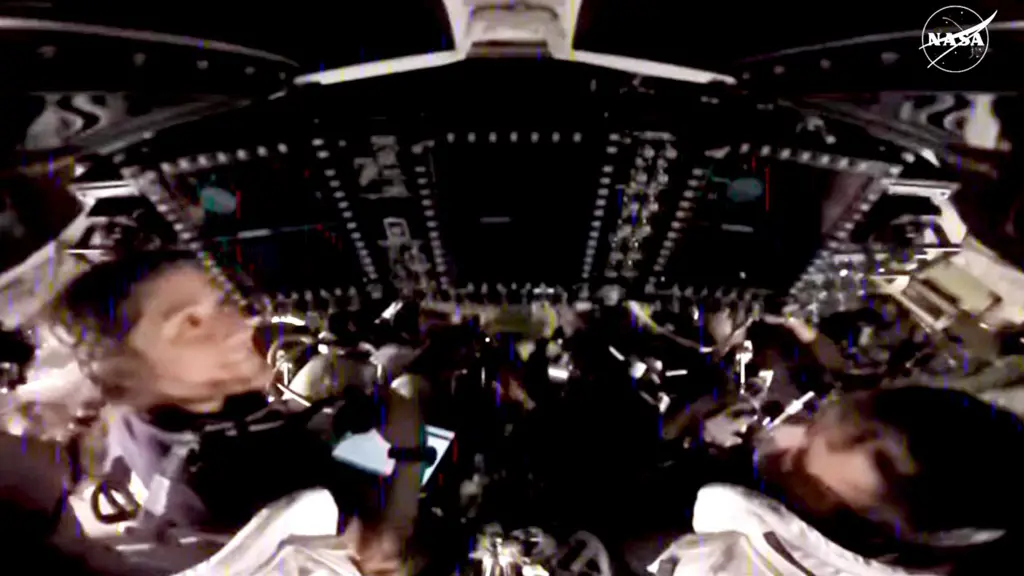
Today, four astronauts sit strapped into Orion as the spacecraft completes its first circuits of Earth. The launch window that delivered them on track now gives way to a 25-hour examination: mission control will systematically exercise systems, replay sequences, and hunt for anything that did not behave exactly as engineers expected. What began as a successful lift-off has become a controlled stress test; a handful of small technical hiccups during ascent and early flight are enough to make engineers treat every reading as a potential risk.
Why this test matters now
The nuts-and-bolts question is simple and urgent: can Orion do everything necessary to carry humans beyond low Earth orbit and back safely? For Artemis II — the first crewed mission in NASA’s renewed lunar programme — the answer cannot be assumed. The mission’s early anomalies, though described by officials as minor, exposed sensitivities in avionics, telemetry and system redundancy that only a full, time‑boxed run-through will reveal. The next 25 hours are designed to stress those exact failure modes before the spacecraft attempts any manoeuvre that would send it farther afield.
Focused stress: what engineers will be pushing
Mission engineers will use the window for a rigorous checklist: cycling life-support processors, exercising propulsion and attitude-control thrusters, rerunning fault-detection software and confirming telemetry routing through backup buses. These are routine exercises on paper, but the presence of a crew turns them into high-stakes rehearsals. The trade-off is blunt: test now and accept schedule slippage if something needs repair, or push ahead and increase operational risk. NASA’s choice to pause and probe signals a conservative bias — appropriate for a mission whose hardware must behave perfectly far from quick rescue.
Small anomalies, large interpretations
There are two competing readings of the early flight irregularities. One, favoured in public NASA statements, is pragmatic: teething problems happen when complex systems start talking to each other in the real environment; engineers have the tools to diagnose and mitigate. The other is less sanguine: minor glitches can be symptoms of systemic integration issues that only show up under flight conditions, and ignoring them risks a cascade when the spacecraft is weeks away from ground support. Both positions are credible, which is why the forthcoming stress campaign is as much about confidence-building as it is about technical verification.
European hardware in the spotlight
Supply-chain and political angles
Beyond hardware, there are political and industrial tensions threaded through the mission. ESA’s industrial return model allocates work across member states; a late-discovered flaw could prompt calls for more on‑shore testing and regulatory scrutiny. For Germany’s space sector, a flawless ESM bolsters the case for deeper involvement in human spaceflight; a problem raises awkward questions about who pays for fixes and how quickly parts can be sourced under export rules and specialised supply chains. In short: a technical anomaly is also a procurement and reputational event.
What’s at risk — and who decides the next step
If the stress campaign uncovers nothing critical, the mission can resume its planned sequence toward translunar manoeuvres and the lunar flyby that will mark Artemis II’s primary objective. If it does find systemic problems, NASA faces familiar but painful choices: repair on-orbit where possible, return early, or pursue incremental fixes that extend mission time and cost. Each option carries knock-on effects for contractors, downstream schedules and the political narrative around Artemis. In that sense, engineering decisions here ripple into industrial policy and international cooperation.
A European lens on a transatlantic programme
From Cologne to Cape Canaveral, stakeholders are watching a complex alliance of contractors, agencies and national funders. ESA’s contribution is not symbolic: the service module is a substantial export of European engineering into a US-led crewed architecture. This interdependence underscores a recurring EU challenge: Europe can build world-class hardware, but it still negotiates access to decision-making and timelines in US-led missions. If for any reason Artemis II slips, the conversation in Brussels will quickly turn to the durability of that partnership and the terms of future work-sharing in lunar logistics.
Looking ahead — a small, dry truth
The next 25 hours are less about drama and more about discipline. The mission will either confirm that months of integration testing paid off, or it will reveal where complex systems still disagree. Either outcome is useful: modern spaceflight advances by finding its weak links, not by pretending they do not exist. Europe has the module; NASA holds the crew; someone will have to own the checklist if the programme keeps marching outward.
- Sources: NASA, European Space Agency, Artemis II mission documentation




Comments
No comments yet. Be the first!