Gulf AI Jolted: iran hits amazon data and the new battlefield
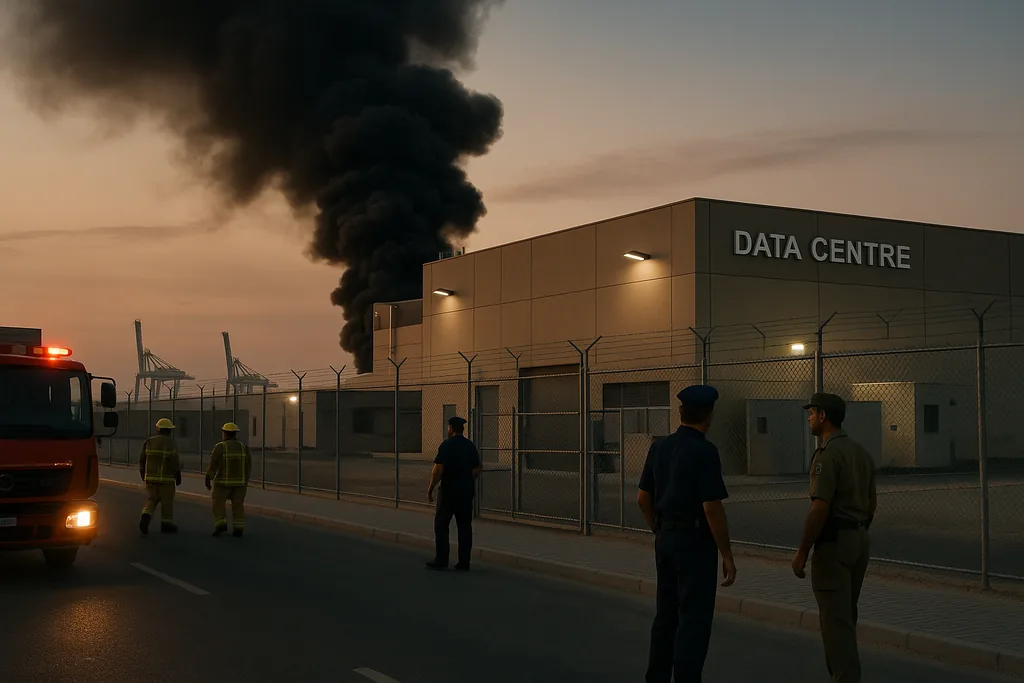
This week, as the region reeled from a series of strikes and disruptions, the phrase iran hits amazon data entered the headlines and boardrooms across the Gulf. Reports from early March 2026 described damage and interruptions at American-owned data‑centre facilities that host cloud services used by governments, banks, and nascent AI labs across the United Arab Emirates and neighbouring states. The strikes were made against more than shipping and airports — they reached the under‑appreciated layer of compute and storage that modern AI relies on, and in doing so they created a new front in a broader geopolitical contest over technology, trade and influence.
iran hits amazon data: immediate technical and commercial impacts
When data‑centre facilities are damaged or taken partially offline the consequences spread faster than a simple outage. For customers running machine‑learning training jobs, interruptions can mean lost compute time worth millions, corrupted training runs and the need to rebuild datasets that are partially or wholly replicated only locally. For companies offering AI services from the Gulf, an outage at a major cloud provider reduces capacity for inference — the online part of services that customers use — and can force traffic to distant regions, increasing latency and costs.
Commercially, the impact is immediate. Dubai and Riyadh have invested heavily to attract cloud providers and AI labs, offering subsidised land and power, regulatory sandboxes and direct incentives to host regional zones. That business model depends on the perception that infrastructure is both world‑class and secure. With data centres hit this week, insurance costs, contract terms and the risk premiums required by investors will rise, at least until providers can demonstrate resilient, multi‑region failovers and new assurances about physical security.
Financial market reactions — from local stock moves to emergency calls in asset‑management offices — have been visible in briefings and market commentary. Portfolio managers said the strikes prompted emergency meetings and sharper conversations with clients about risk, implying that shocks to critical infrastructure have become an input to investment decisions across global portfolios.
Gulf diversification and the cloud‑dependent economy
The Gulf's push to diversify away from hydrocarbons has been built on tourism, logistics, finance — and crucially, a bet that cloud and AI would form a new high‑value pillar. Governments offered generous incentives to make their cities digital hubs: data centres, AI research labs, local talent programmes and billions of dollars in sovereign capital backing. That architecture is highly dependent on a small number of physical sites and a handful of global cloud providers to deliver compute and storage close to local customers.
When iran hits amazon data centres, it is not simply an attack on a company: it is an assault on the economic assumptions that underpinned the diversification strategy. Tourists and foreign executives expect secure airports and safe hotel districts; enterprises expect uninterrupted cloud access. Damage to either the physical port or the cloud stack erodes confidence in the same cycle — investors delay projects, conferences are re‑routed, and long‑term contracts are renegotiated. The result is a stress test of the Gulf's entire business model at a moment when it has been most visible: the global AI race.
Cloud defence, contingency and the limits of redundancy
Defences fall into two broad classes: cyber and physical. Cyber protections — network isolation, immutable backups, multi‑cloud architectures and DDoS mitigation — are well understood and routinely exercised. Physical security for data centres is also mature in normal times: hardened perimeters, armed guards, and redundant power and cooling. What has changed is the political calculus: a state actor can choose to make an infrastructure node a deliberate target as part of wider retaliation, removing some assumptions underpinning traditional continuity plans.
For customers, the practical responses are expensive but clear: move to multi‑zone, multi‑provider deployments; adopt cross‑region backups; and design AI workloads to be restartable and shardable so that partial failures do less damage. For cloud operators, the tests this week will accelerate investments in on‑site hardening, rapid recovery playbooks and closer cooperation with host governments and militaries to protect civil infrastructure.
How a cyberattack or strike on Amazon data centres affects AI development
Beyond the day‑to‑day, the reputational signal is severe: companies and governments will think twice before committing deep pockets to build AI capacity in a location perceived as vulnerable. That will favour providers and regions that can demonstrate both geopolitical stability and robust, distributed cloud footprints — pushing some development back to North America and Europe unless Gulf states and cloud firms can provide credible new guarantees.
Security calculus: why would Iran target cloud providers to influence the Gulf AI drive?
Targeting cloud infrastructure is strategic because it multiplies the effect of any single blow. Hitting a small number of high‑value, high‑visibility assets creates disproportionate economic and political consequences without the need for wide‑scale conventional deployments. Cloud providers are also closely associated with the United States and Western technology ecosystems — an attack can therefore be framed as a message in a larger confrontation.
Operationally, a state actor can seek to deter further involvement, raise the cost of certain partnerships, and signal to regional governments that hosting particular providers is not risk‑free. For the Gulf's AI race, that kind of signalling has the paradoxical effect of both slowing near‑term projects and increasing long‑term demand for more secure, sovereign or hybrid cloud solutions — but only if host states can credibly guarantee protection.
What comes next for developers, cloud providers and policy makers
For AI developers the immediate practical advice is to audit where critical workloads live, decentralise where feasible and stress‑test recovery procedures. For cloud providers the week’s events will translate into faster roll‑outs of multi‑region failovers, enhanced insurance offerings and closer dialogue with customers about SLAs tied to geopolitical risk.
Policy makers face harder choices. They must weigh whether to invest in sovereign cloud infrastructure, accept the higher cost of guaranteed resilience, or seek deeper security guarantees from international partners. They will also need clearer public communications to reassure investors and companies that commercial continuity can be preserved even under geopolitical strain.
This episode underlines a simple truth about modern technology: compute is geography. The Gulf’s AI ambitions were never only about algorithms and talent; they depended on a quiet, physical layer of wires, cooling, and guarded rooms. With iran hits amazon data now part of the vocabulary, planners across the Gulf will be forced to update that basic map — and fast.
Sources
- Amazon Web Services (service notices and infrastructure briefings)
- Dubai ports and civil aviation authorities (official damage and disruption reports)
- Argent Capital Management (market commentary)




Comments
No comments yet. Be the first!