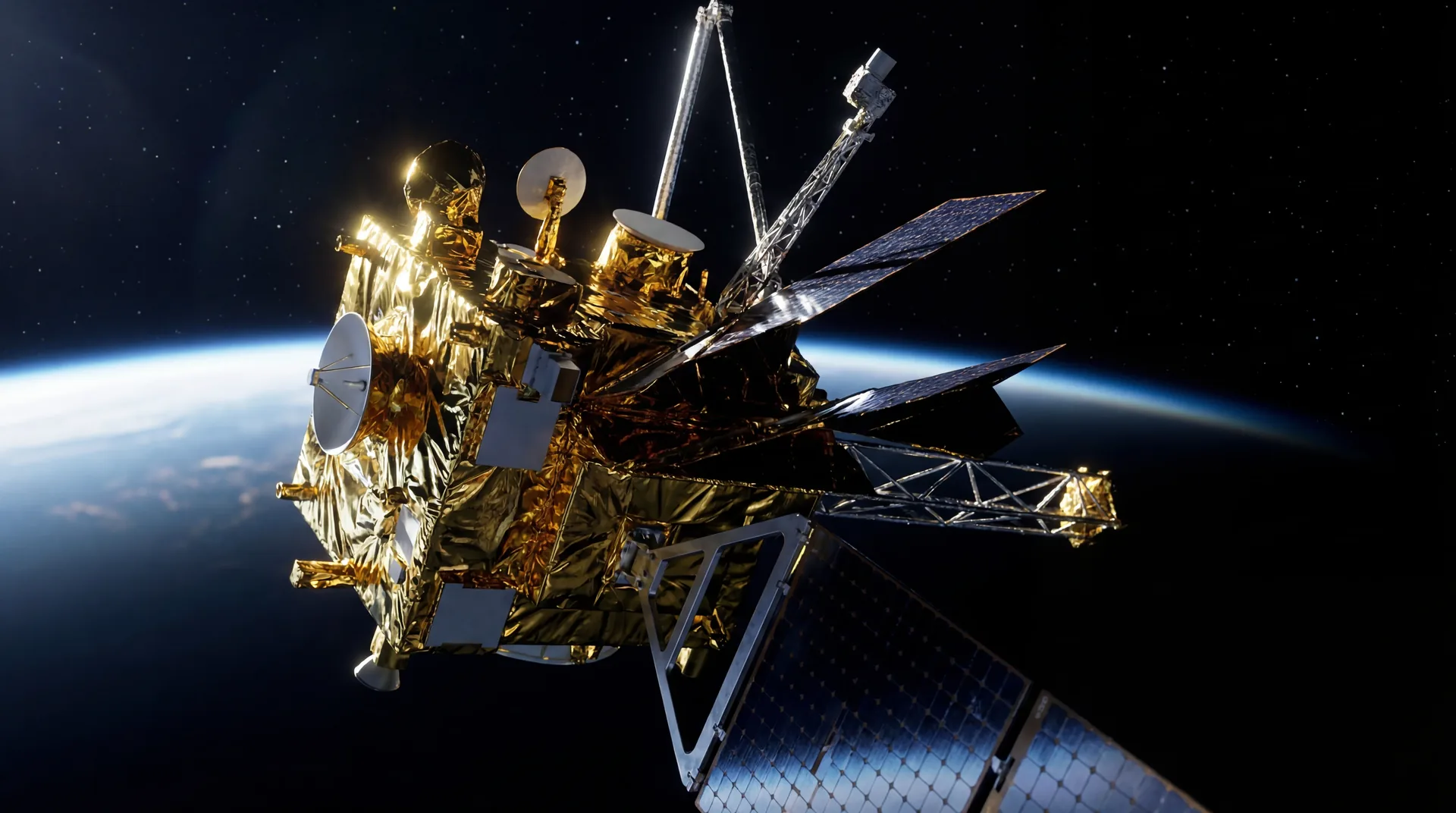

On 28 March 2026, the European Space Agency (ESA) achieved a significant milestone in space-based infrastructure with the successful launch of the first two satellites for the Celeste in-orbit demonstration mission. Departing from New Zealand aboard Rocket Lab’s Electron rocket, these spacecraft represent the first step in a strategic evolution of European positioning, navigation, and timing (PNT) capabilities. By deploying a specialized layer of satellites in Low Earth Orbit (LEO), the mission aims to augment the existing Galileo satellite system, ensuring higher precision and better signal penetration in environments where traditional medium Earth orbit (MEO) signals often falter.
How does Celeste improve the current Galileo system?
The Celeste mission improves the Galileo system by adding a Low Earth Orbit (LEO) layer that complements existing medium Earth orbit satellites to boost resilience against jamming and interference. This multi-layered architecture enables faster time-to-first-fix and centimeter-level accuracy while introducing new capabilities like two-way emergency communication and enhanced timing services for 5G and 6G networks.
ESA designed the Celeste mission to address the growing demand for "Resilience from Space." While the current Galileo and EGNOS systems provide world-class accuracy, they operate in Medium Earth Orbit (MEO) at approximately 23,222 kilometers. By contrast, the Celeste demonstrators orbit much closer to the planet, allowing for stronger signal reception and lower latency. This proximity is critical for modern infrastructure, where even minor signal disruptions can impact autonomous transportation, power grids, and global financial synchronization.
Why is LEO better for satellite navigation than MEO?
LEO is better for satellite navigation than MEO because the satellites fly closer to Earth, delivering stronger signals that penetrate urban canyons, heavy foliage, and even indoor environments. The rapid motion of LEO satellites relative to the ground also allows receivers to achieve high-precision positioning much faster than traditional systems, while providing superior resistance to spoofing.
The physics of signal propagation dictates that proximity to the receiver reduces the path loss of radio signals. In practical terms, this means the ESA Celeste satellites can broadcast signals that are significantly more robust than those from distant MEO satellites. This is a game-changer for urban canyons—city centers with tall buildings that typically block or reflect navigation signals. Furthermore, the higher orbital velocity of LEO spacecraft provides a diverse range of geometries, which helps ground-based receivers resolve their position with centimeter-level accuracy in a fraction of the time currently required.
What is the role of Rocket Lab in the Celeste mission?
Rocket Lab served as the primary launch provider for the inaugural Celeste satellites, utilizing its Electron rocket to deliver the payloads into precise low Earth orbits from its New Zealand launch complex. This partnership exemplifies the "New Space" approach, emphasizing rapid deployment and flexible launch windows to accelerate the validation of critical European space technologies.
The use of the Electron rocket allowed the ESA to move quickly from development to orbit. The two satellites, built respectively by GMV (Spain) and Thales Alenia Space (France/Italy), separated from the launcher approximately one hour after the 10:14 CET liftoff. According to ESA Director General Josef Aschbacher, this mission marks a shift toward a more agile development model. By leveraging commercial launch providers like Rocket Lab, the agency can test innovative signals and frequencies in real-world conditions far sooner than traditional procurement cycles would allow.
Technical Methodology and In-Orbit Validation
The initial phase of the mission is focused on validating core technologies and securing frequency rights in the L-band and S-band spectrums. These frequencies are governed by the International Telecommunication Union (ITU), and their successful use in orbit is a prerequisite for the mission's operational phase. The satellites function as an in-orbit test bench, allowing researchers to experiment with different signal structures and modulation techniques that will eventually define the next generation of European satellite navigation.
Key technical objectives for the Celeste IOD-1 and 2 satellites include:
- Testing new signal capabilities for enhanced indoor and polar region availability.
- Validating inter-satellite links to improve constellation synchronization.
- Demonstrating robustness against interference and intentional signal jamming.
- Experimenting with Internet-of-Things (IoT) applications and device tracking.
The Impact of Private Industry Collaboration
The Celeste mission is the result of a massive industrial effort involving over 50 entities from 14 European countries. The fleet is being developed through two parallel contracts led by GMV (with OHB as a core partner) and Thales Alenia Space. This competitive dual-track approach ensures that ESA can evaluate multiple technological solutions simultaneously, fostering innovation and ensuring that European industry remains a leader in the global PNT market.
Francisco-Javier Benedicto Ruiz, ESA’s Director of Navigation, emphasized that satellite navigation has become integral to society over the past two decades. He noted that Celeste ensures Europe continues to pioneer innovation in positioning and timing. By integrating commercial expertise with public institutional goals, the mission sets a precedent for how future European Union space infrastructure will be built and maintained.
Future Implications and "What's Next"
The successful launch of the first two satellites is only the beginning of a multi-year roadmap. Additional launches scheduled for 2027 will expand the demonstration constellation to a total of 11 spacecraft. This full configuration will provide a comprehensive environment for large-scale experimentation across diverse user environments, including maritime, railway, and aviation sectors.
Ultimately, the data gathered during this in-orbit demonstration phase will inform the European Union's decision regarding a permanent LEO navigation layer. This future infrastructure would serve as a "resilient shield" for Galileo, protecting critical services and enabling entirely new applications in autonomous driving and emergency response. By 2027, the Celeste mission will have laid the groundwork for a more secure and accurate digital future for all of Europe.





Comments
No comments yet. Be the first!