Shina Ansari's letter and a diplomatic alarm bell
On April 8, 2026, Shina Ansari, head of Iran's Department of Environment (DOE), sent a sharply worded letter to the executive director of the United Nations Environment Programme (UNEP). In that letter — a diplomatic alarm bell — Ansari explicitly DOE warns UNEP about the environmental consequences of recent airstrikes that she says have struck peaceful nuclear facilities, including multiple strikes on the Bushehr nuclear power plant. The message is part legal protest, part environmental risk assessment: it names attacks, cites International Atomic Energy Agency (IAEA) protections, and urges UNEP to convene emergency meetings of environment ministers to force a halt to what the DOE calls "war crimes."
DOE warns UNEP about contamination risks to the Persian Gulf
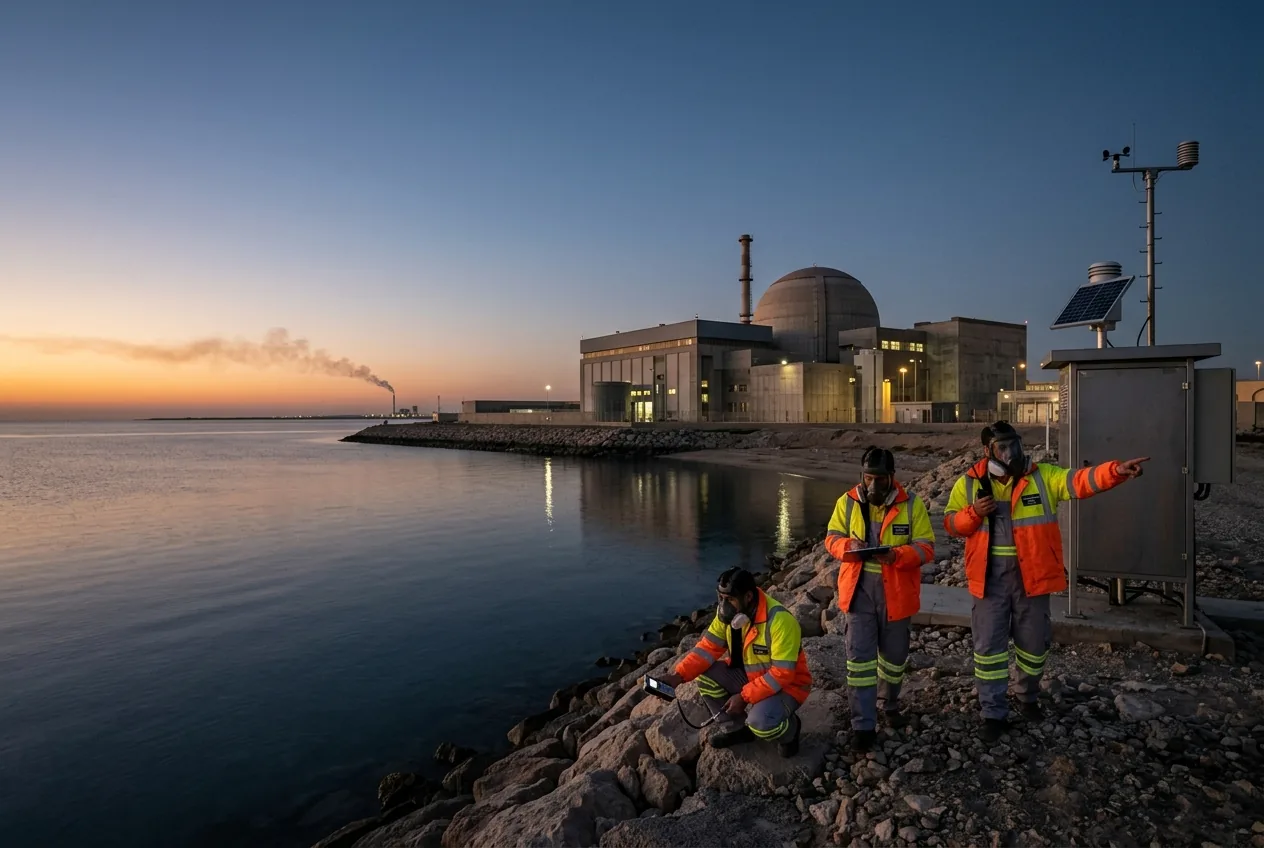
The DOE letter frames the threat in geographic and ecological terms: the Persian Gulf and the Sea of Oman are downstream recipients of any sustained radiological release from coastal facilities. A strike that breaches containment, damages a spent-fuel pool, or sets plant systems on fire could release radioisotopes to air, to surface waters, and to sediment. Once in the marine environment, some radionuclides bind to particles and sink into sediments, others concentrate in fish and shellfish that are central to regional livelihoods and food systems — an exposure pathway that can persist for years or decades depending on the isotopes involved.
Those marine pathways matter practically: desalination plants that supply drinking water along Gulf coasts draw from the same seawater columns and lack rapid means to filter soluble radionuclides. Fisheries, coastal agriculture and urban water systems would face immediate disruption, and the socioeconomic ripple effects would extend well beyond the initial blast radius. The DOE's request that UNEP mobilize environment ministers is therefore not just rhetorical; it is a call to assess and coordinate monitoring, food-security protections, and water-supply contingencies across national borders.
DOE warns UNEP about legal and institutional gaps
Ansari’s letter leans heavily on law as leverage. She reminds UNEP that attacks on active nuclear facilities are prohibited under international humanitarian law and under IAEA regulations. That legal scaffold is meant to deter attacks, but the DOE's complaint is procedural as much as legal: international bodies, she argues, have so far offered statements of concern rather than the explicit condemnation and emergency convening she demands.
Institutional responsibilities here are tangled. The IAEA sets technical safety standards and manages on-site safeguards; UNEP has the convening power for environmental assessments and ministerial coordination. Neither institution is a military actor, and neither can unilaterally stop kinetic attacks — but both can marshal monitoring resources, define transboundary impact assessments, and push member states to fund remediation and health surveillance. The DOE's letter is an attempt to translate legal protections on paper into operational environmental action in the field.
On-the-ground limits of plant safety and the reality of attack scenarios
Nuclear plants are engineered for accidents that occur during normal operation — loss of coolant, design-basis earthquakes, or mechanical failure — and contain multiple layers of redundancy: containment buildings, emergency core cooling, automatic shutdown systems, and backup power supplies. Those systems are effective within the design envelope of peacetime failures, but they are not built to withstand deliberate, targeted military strikes or the cascading damage that follows strikes on regional infrastructure.
How strikes can affect air, water and soil contamination
A kinetic strike creates multiple contamination modes. An immediate atmospheric release results in airborne plumes and local fallout that deposit radioactivity onto soils and urban surfaces; in marine settings, hot particles and soluble isotopes enter seawater and can be carried into estuaries and onto coasts. Soil contamination can persist and enter food chains through crops, livestock, and groundwater recharge. The scale and longevity of contamination depend on the radionuclide mix, the amount of material released, meteorological conditions, and the speed and effectiveness of evacuation and cleanup.
Importantly, measuring and attributing contamination after an attack is technically demanding. It requires coordinated aerial, marine and terrestrial sampling; isotope-specific lab analyses; and transparent data-sharing across borders — all of which UNEP and the IAEA can help organize but which require political will, laboratory capacity, and funding. The DOE's appeal to UNEP is, in part, a request for that operational muscle.
Carbon and climate: the hidden emissions of regional war
Ansari's letter also includes a striking climate claim: "experts estimate that the carbon footprint generated in just the first two weeks of the war is equivalent to the carbon footprint of 60 countries for an entire year." Whether that numerical comparison is precise, its rhetorical point is clear — modern combat, with massed aircraft, naval forces, and destroyed infrastructure, creates a major short-term pulse of greenhouse gases and black carbon.
Fires at refineries, transport of munitions and fuel, reconstruction, and the loss of carbon sinks from damaged ecosystems all add to a conflict's emissions profile. That footprint matters because it converts a regional security crisis into an immediate climate and public-health problem: smoke and soot degrade air quality, while CO2 pulses accelerate a cumulative global forcing that is measured in decades, not days. Environment ministries convened by UNEP would therefore have to address both radioactive contamination and the climate and air-quality fallout of warfare.
Who carries the risk — public health, monitoring gaps and unequal exposure
The biological risk of a radiological release is not evenly distributed. Coastal fishers, desalination-dependent cities, lower-income communities near industrial zones and informal workers who cannot evacuate quickly will carry disproportionate burdens. Long-lived isotopes concentrate in particular food chains, and health surveillance systems in the region vary widely in capacity to detect and attribute increased cancer risks or acute radiation syndromes.
Those are policy failures as much as scientific uncertainties: a credible response requires cross-border epidemiology, lab networks capable of low-level radionuclide detection, clear evacuation protocols and compensation mechanisms for displaced workers and fishers. Ansari’s plea to UNEP highlights how environmental institutions are expected to translate international law into protective, practical measures for communities that cannot simply wait for distant diplomacies to resolve a conflict.
Practical steps UNEP and others can take now
UNEP cannot stop a missile, but it can help build the architecture for a faster, more equitable response. That includes convening environment ministers to agree on a common monitoring protocol, mobilizing international lab capacity to analyse samples quickly, and coordinating aid for water-safety and food-security interventions. The IAEA would need to be in the center of any technical assessment of plant status and radiological release, while UNEP can insist on the environmental and human-rights framing that often gets sidelined in security discussions.
Those steps are messy and politically fraught; they require donor funding, transparent reporting and, most importantly, access to the sites — access that combatants will not freely provide unless there is sufficient international pressure. The DOE’s letter is an attempt to create that pressure by shifting the conversation from abstract law to immediate, monitorable environmental harms.
The genome is precise; the world it lives in is anything but. This crisis is not only about reactors and isotopes but about the political choice to measure — or to ignore — the harms that follow.
Sources
- United Nations Environment Programme (UNEP)
- International Atomic Energy Agency (IAEA) — safety standards and safeguards
- Iranian Department of Environment (DOE) — official letter and statements




Comments
No comments yet. Be the first!