Bacterial mouths and genetic circuits: a radical inside-out attack
On 24 February 2026 a team led at the University of Waterloo published a proof-of-concept that turns a long-standing observation into a programmable therapy: scientists engineer bacteria eat into the oxygen-starved cores of solid tumours and consume them from the inside out. The idea rests on a simple ecological fact—many solid tumours contain necrotic, nutrient-rich pockets where oxygen is absent—and an increasingly sophisticated synthetic-biology tool kit that can add control, safety and timing to living microbes. The Waterloo group used Clostridium sporogenes, an anaerobic soil microbe that germinates and grows only where oxygen is absent, and then layered in genetic switches so the bacterium only activates oxygen-tolerance traits once it has amassed inside a tumour.
The result is not a mindless microbe; it is a programmed agent that senses population density and local chemistry before switching behaviour. That combination of metabolic preference and DNA logic is why researchers today are framing these approaches as controllable, rather than simply dangerous. Yet the system is still at the preclinical stage: animals, not patients, have been tested so far, and multiple technical and regulatory hurdles remain before this moves into human trials.
Engineered bacteria eat: oxygen-sensing circuits
The Waterloo researchers solved a practical problem that has dogged bacterial cancer therapy for decades. Anaerobic bacteria reliably germinate in the oxygen-free tumour core, where they feed on dead cells and multiply, but they typically die or are cleared as they expand toward better-oxygenated tumour margins. To address that, the team introduced a gene from a related organism that increases oxygen tolerance—but they did not switch it on all the time. Instead they built a quorum-sensing circuit that activates the oxygen-rescue genes only after enough bacteria have accumulated inside the tumour.
Quorum sensing is a bacterial communication mechanism: cells release small molecules that build up with population density and trigger coordinated behaviours once a threshold is reached. That thresholding keeps the modified Clostridium from expressing oxygen-survival machinery while circulating through the body, lowering the risk that engineered bacteria would grow in healthy, oxygenated tissue. In lab tests the researchers first verified the circuit by replacing the therapeutic gene with a fluorescent reporter, confirming the timing and localisation of activation. The next step is to combine the oxygen-tolerance module with the killing or nutrient-consuming functions into a single strain and evaluate efficacy and safety in more advanced animal models.
Engineered bacteria eat: Trojan delivery of oncolytic viruses
Engineering bacteria to eat tumours is only one strand of a broader trend that uses microbes as delivery vehicles. At Columbia University, teams have shown that tumour-seeking bacteria can act like Trojan horses to smuggle cancer‑killing viruses into tumours that would otherwise neutralise or exclude viral therapies. In that system, bacteria such as attenuated Salmonella home to low-oxygen tumour niches, invade cancer cells, then lyse and release an oncolytic virus directly inside the tumour environment.
Crucially, the Columbia platform embeds molecular safeguards: the engineered virus depends on an enzyme or protease the bacterium supplies for correct maturation, so infectious viral particles can form only where bacteria are present. That synthetic interdependence is designed to prevent viral spread in healthy tissue and reduce the risk of systemic infection—an important safety feature as teams move toward clinical translation. The Trojan-bacteria approach therefore complements the eat-from-within strategy by combining bacterial tumour tropism with the cell‑killing replicative power of viruses.
Tumour microenvironment engineering and reprogrammed immune cells
These microbial strategies sit alongside a wave of work that attacks the tumour's protective ecosystem rather than cancer cells directly. Several groups, including teams at Mount Sinai and KAIST, are reprogramming the tumour microenvironment—turning the immune cells that normally shield cancer into agents of destruction. Mount Sinai repurposed CAR T cells to target tumour-associated macrophages, removing or reprogramming them and opening the tumour to immune attack. KAIST developed a lipid-nanoparticle approach to reprogram macrophages in situ so they become CAR‑macrophages without removing cells from the patient.
Separately, MIT and collaborators created antibody–lectin hybrids that strip a cancer cell’s sugar ‘camouflage’, lifting glycan‑based immune brakes so macrophages and other immune cells can recognise tumours. Taken together, these studies show a convergent strategy: combine microbes that colonise and perturb tumours, viruses that lyse cancer cells, and immune reprogramming to sustain and broaden the anti‑tumour response. Each approach targets a different ingredient of the tumour fortress—oxygen levels, protective macrophages, immune checkpoints—making combination regimens an attractive long-term vision.
How scientists engineer bacteria to target tumours
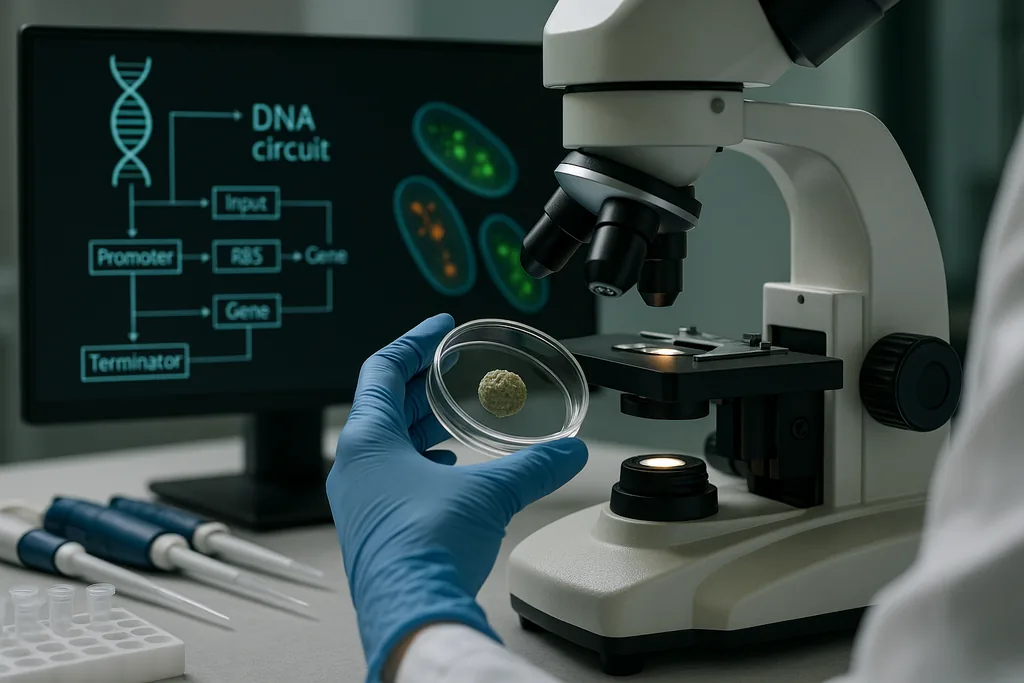
Genetic engineering for tumour targeting is now a layered engineering problem: researchers choose a chassis organism with the right biological preferences (for example, anaerobes that prefer oxygen-free cores), then add or delete genes to change metabolism, surface recognition or survival. They use DNA circuits—synthetic constructs that behave like electrical circuits—to control expression of therapeutic functions, and quorum-sensing or other sensors to time activation. In some systems bacteria carry payloads such as oncolytic viral RNA, enzymes that convert prodrugs into active toxins, or immunostimulatory molecules that attract killer T cells and natural killer cells.
These are not off‑the‑shelf modifications. Teams test each element—pathogen attenuation, circuit fidelity, payload activation and molecular safety locks—extensively in cell cultures and multiple animal models. The papers released this winter and last year document both the molecular designs and the stepwise validation needed to demonstrate feasibility before human studies could be considered.
Risks, safety engineering and the road to patients
Bacteriotherapy carries real risks: unintended infection, sepsis, horizontal gene transfer to other microbes, and collateral tissue damage from inflammatory immune responses. That is why modern designs focus heavily on built‑in safety: quorum-sensing thresholds, synthetic dependencies between virus and bacterium, protease gating, and chassis strains with well-characterised attenuation. Developers are also exploring kill-switches and antibiotic-sensitivity backstops so clinicians can eliminate engineered microbes if needed.
Regulatory and manufacturing issues are substantial. Living medicines require consistent, sterile production and robust quality controls to ensure genetic constructs do not mutate or escape containment. Clinical translation will demand carefully staged human trials that first prove safety in small cohorts and then test whether these strategies add meaningful benefit over existing therapies. Several teams and startups spun out of the research groups are already working toward translation, but a cautious timeline—several years to a decade—is realistic for first‑in‑human studies for many of these constructs.
Can bacteria actually eat cancer tumours from the inside? The short answer is yes in animal models: anaerobic microbes can colonise and consume necrotic tumour cores, shrivelling masses of dead tumour tissue and releasing inflammatory cues that recruit immune responses. But clearing an entire tumour, especially oxygenated margins and metastatic sites, typically requires combination strategies that bring immune effectors, viruses, or targeted drugs into play. Bacteriotherapy is therefore most promising as one component in multi-modal therapies rather than a lone cure.
What is bacteriotherapy and how is it used? Bacteriotherapy is the deliberate use of live bacteria as a therapeutic agent. In oncology it can mean bacteria that directly consume tumour tissue, bacteria that deliver drugs or viruses into tumours, or bacteria engineered to secrete molecules that modulate the immune system. Historically the field traces back to the early 20th century, but modern synthetic biology has given researchers the tools to build far more precise and potentially safer living medicines.
How close are we to clinical use? Some bacterial and bacterial‑derived products have entered clinical testing, and one benefit of the new designs is that they often reuse chassis or components with existing safety records. Nonetheless, the specific oxygen‑tolerant, quorum‑gated Clostridium and the bacteria–virus hybrids described in recent papers remain preclinical. Translational efforts are under way, and patents and spin‑outs suggest commercial pathways are forming, but robust human data are still years away.
Sources
- University of Waterloo (research on Clostridium sporogenes and quorum-sensing circuits)
- Columbia University School of Engineering and Applied Science (bacteria delivering oncolytic viruses)
- Icahn School of Medicine at Mount Sinai (macrophage-targeted CAR‑T research)
- Massachusetts Institute of Technology and Stanford University (antibody–lectin chimeras / glyco-immune checkpoint research)
- ACS Synthetic Biology (journal reference for quorum-sensing construction)
- Nature Biomedical Engineering (engineered bacteria and oncolytic virus publication)
- Cancer Cell (macrophage-targeted CAR‑T study)
- Nature Biotechnology (AbLec glyco-checkpoint publication)



Comments
No comments yet. Be the first!