brandon researcher helps uncover: regurgitalite from the Bromacker
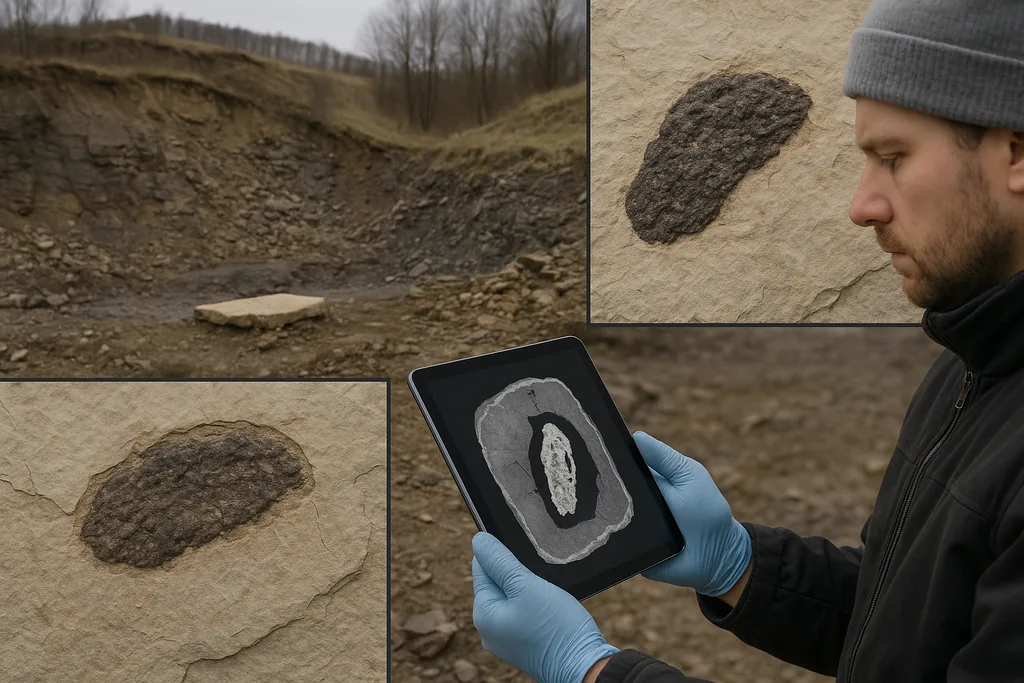
Brandon University researcher helps uncover a nearly 290‑million‑year‑old regurgitalite — fossilized vomit — that was excavated from the Bromacker fossil locality in central Germany and described this week in a peer‑reviewed Scientific Reports paper. The find, co‑authored by Dr. Mark MacDougall of Brandon University, is the earliest confirmed example of a predator‑thrown up meal from a fully terrestrial ecosystem. Because the specimen preserves partially digested bones in an ordered cluster, researchers can read feeding behaviour and predator–prey relationships in a way bones scattered on the ground rarely allow.
brandon researcher helps uncover feeding behaviour in early Permian ecosystems
The regurgitalite is important because it records a single feeding event — and the consequences of it — rather than the accumulated remains that make up many fossil assemblages. Using high‑resolution CT scanning the team mapped dozens of bone fragments within the mass and identified remains attributable to at least three different prey types: a small reptile, a quick, lizard‑like vertebrate and a chunk from a much larger herbivorous animal. Those mixed contents, combined with the size and alignment of the bones, point to a top predator — possibly a pelycosaur relative in the Dimetrodon grade — that swallowed more than it could process and later expelled part of its meal.
Methods and evidence
Researchers approached the specimen with a suite of non‑destructive techniques. CT scanning produced a virtual three‑dimensional map of bone positions and shapes inside the rock, allowing the team to sort overlapping fragments and test whether the assemblage reflected stomach packing rather than chance accumulation. Chemical analyses of the host sediment and mineral coatings around the fragments revealed a composition distinct from ordinary matrix, a pattern consistent with diagenetically altered gut contents rather than ordinary burial sediment. Taken together — bone alignment, mixed taxonomic signal and geochemical anomaly — these lines of evidence support the interpretation that the object is a regurgitalite.
How researchers date and identify the specimen
The age attached to the regurgitalite comes from the established geologic context of the Bromacker site, a fossil‑rich horizon whose sediments are correlated to rocks around 290 million years old. That stratigraphic framework—built from decades of fieldwork at Bromacker and regional correlations—provides the temporal anchor. Identification of the bones inside used comparative anatomy: scanned fragments were compared to known skeletal elements from the Bromacker fauna and related Permian taxa. When bones of different sizes and morphologies are found together and aligned in a compact mass, the anatomical matches and spatial relationships help paleontologists distinguish a swallowed and regurgitated meal from a jumble of bones delivered by other taphonomic processes.
Regurgitalite versus coprolite
Fossilized vomit (regurgitalite) and fossilized feces (coprolite) record different parts of an animal's digestive process and therefore preserve different kinds of information. Regurgitalites tend to contain more robust, less‑chewed items — such as bones, scales or plant fragments — that the predator could not digest or chose to expel. They often show oriented packing of elements and lack the homogenized matrix typical of coprolites. Coprolites commonly contain more thoroughly processed material, including ground bone, mineralized organic residues and a compacted fecal matrix. In this case, the alignment and relative lack of digestive abrasion on many bones were key clues that the mass had been vomited rather than excreted.
What the fossilised meal reveals about ancient diets and ecosystems
Individual regurgitalites are rare but scientifically valuable because they link a consumer directly to the consumed. This specimen opens a window into what a single predator was eating on a single day nearly 300 million years ago, giving paleontologists a snapshot of trophic interactions rather than statistical inferences from isolated bones. The presence of multiple prey types in one mass suggests opportunistic feeding on a mixed diet — small vertebrates plus portions of larger herbivores — and demonstrates that complex predator strategies, including selective expulsion of indigestible parts, were already in place in Permian terrestrial ecosystems. Such behaviour has modern parallels: today’s raptors, owls and some reptiles routinely eject indigestible remains as pellets; the fossil shows an ancient corollary of that ecological strategy.
Techniques used to study fossilized regurgitated material
Beyond CT and comparative anatomy, teams studying regurgitalites combine micro‑photography, micromorphology and elemental analysis to characterise preserved tissues and mineral replacements. CT scans allow researchers to digitally dissect the mass, isolate fragments, and reconstruct probable anatomical positions. Geochemical work can identify mineral phases and trace elements concentrated by digestive fluids, while thin sections and microscopy reveal whether bone surfaces bear stomach acid etching or abrasion signatures. By layering these independent lines of evidence, paleontologists can move from plausible explanation to a robust interpretation that a mass is regurgitated material rather than a coincidental bone accumulation.
Context and continuing discoveries at Bromacker
The Bromacker locality has yielded a suite of exceptionally preserved terrestrial fossils that illuminate early Permian life on land. The site is noted for preserving not only bones but impressions of soft tissues and skin, features that typically decay before fossilization. Dr. MacDougall and colleagues have recently described some of the oldest known impressions of reptilian scales from the same deposit, underlining Bromacker’s role as a repository of behavioural and integumentary data, not just skeletal remains. Together, these finds are helping palaeontologists reconstruct a richer, more textured picture of ecosystems at a time when vertebrate life was consolidating on land.
Dr. Mark MacDougall — the Brandon University researcher who helps uncover these fossils — emphasizes how rare this kind of direct dietary evidence is. He notes that because skin and other delicate impressions are usually lost to decay, finding both integumentary detail and a preserved regurgitalite at Bromacker offers unusually complete snapshots of organismal biology and interactions. That combination of behavioural and anatomical data strengthens ecological models for deep time and informs how scientists read fossil deposits elsewhere.
Broader significance and next steps
Beyond the novelty of being the oldest reported terrestrial regurgitalite, the specimen underscores a general point: behaviours we think of as modern have deep evolutionary roots. The capacity to expel indigestible parts, and the ecological pressures that make that adaptive, were present hundreds of millions of years ago. Future work will expand comparative scans of similar masses, search other sites for overlooked regurgitalites, and refine geochemical fingerprints that distinguish gut‑processed material from ordinary sediment. The Bromacker specimen will also be re‑examined as part of ongoing field seasons and lab studies, and it will likely appear in broader morphological and isotopic studies aimed at reconstructing food webs from the Permian terrestrial record.
For the public and for researchers alike, the find is a reminder that even apparently odd or unglamorous objects — a clump of rock that once passed through an ancient throat — can rewrite details of long‑buried ecologies. As teams continue to apply modern imaging and chemical methods to classical fossil localities, more behavioural fossils may come to light, enriching our understanding of life’s deep past.
Sources
- Scientific Reports (research paper describing the Bromacker regurgitalite)
- Brandon University (researcher Dr. Mark MacDougall and associated press materials)
- Bromacker fossil locality research groups (central Germany stratigraphic and paleontological studies)




Comments
No comments yet. Be the first!