Обзор и основные выводы
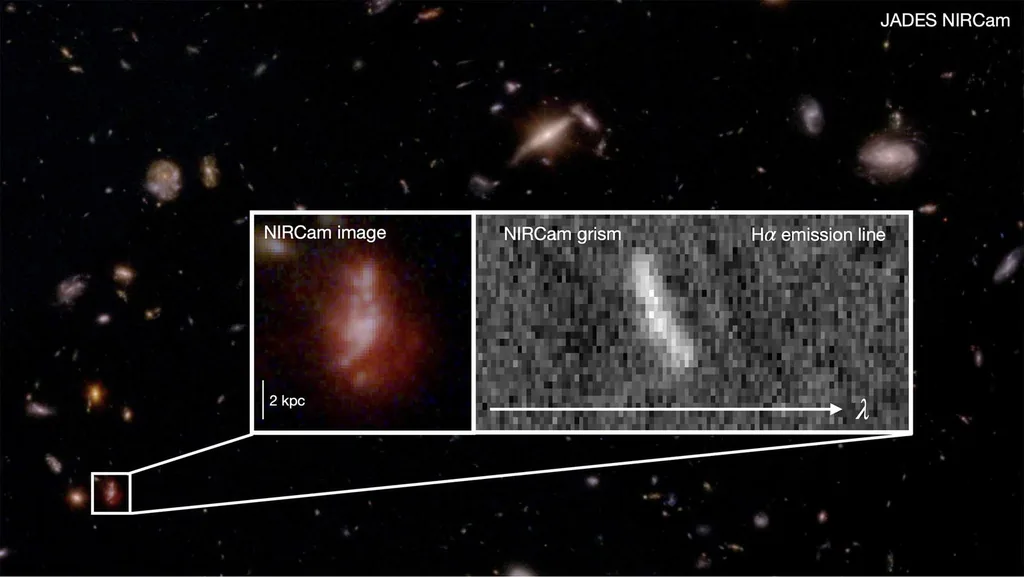
Исследователи из Кембриджского университета проанализировали более 250 наблюдений космического телескопа James Webb, посвященных галактикам, существовавшим в период от 800 миллионов до 1,5 миллиарда лет после Большого взрыва. Вместо преобладания гладких вращающихся дисков команда обнаружила, что большинство галактик в этот ранний период являются неправильными, фрагментированными и динамически турбулентными.
В ходе исследования были изучены движения газа в большой популяции галактик с относительно малой массой и обнаружен широкий спектр кинематических состояний. В некоторых системах наблюдаются признаки формирования упорядоченного вращения, однако в большинстве из них проявляются хаотичные движения газа, характерные для частых слияний, интенсивных эпизодов звездообразования и гравитационных неустойчивостей.
Метод: Спектроскопия с использованием гризм NIRCam
Команда использовала бесщелевую спектроскопию инструмента NIRCam, работающего в режиме гризм. Гризмы разделяют входящий свет по длинам волн в диапазоне 2,4–5,0 микрометров, что позволяет измерять инфракрасные эмиссионные линии, которые отслеживают кинематику ионизованного газа. Прибор обеспечивает спектральную разрешающую способность порядка 1600, что позволяет проводить детальные измерения скорости внутри галактик.
Гризмы NIRCam, изначально разработанные для оптической юстировки, поддерживают как широкопольную спектроскопию, так и режимы временных рядов. Для этой работы исследователи применили новый алгоритм к спектрам гризм и существующим изображениям, чтобы составить карту движения газа внутри отдельных галактик во всей исследуемой выборке.
Контекст и интерпретация
Результаты помогают проследить переход от эпохи реионизации к более позднему пику космического звездообразования, часто называемому «космическим полуднем», показывая, как малые хаотичные «строительные блоки» постепенно превращались в более упорядоченные структуры, подобные спиралям, наблюдаемым в близлежащей Вселенной.
Следующие шаги
Публикация
Результаты опубликованы в Monthly Notices of the Royal Astronomical Society в статье под названием «The Dawn of Disks: Unveiling the Turbulent Ionised Gas Kinematics of the Galaxy Population at z ~ 4–6 with JWST/NIRCam Grism Spectroscopy».




Comments
No comments yet. Be the first!