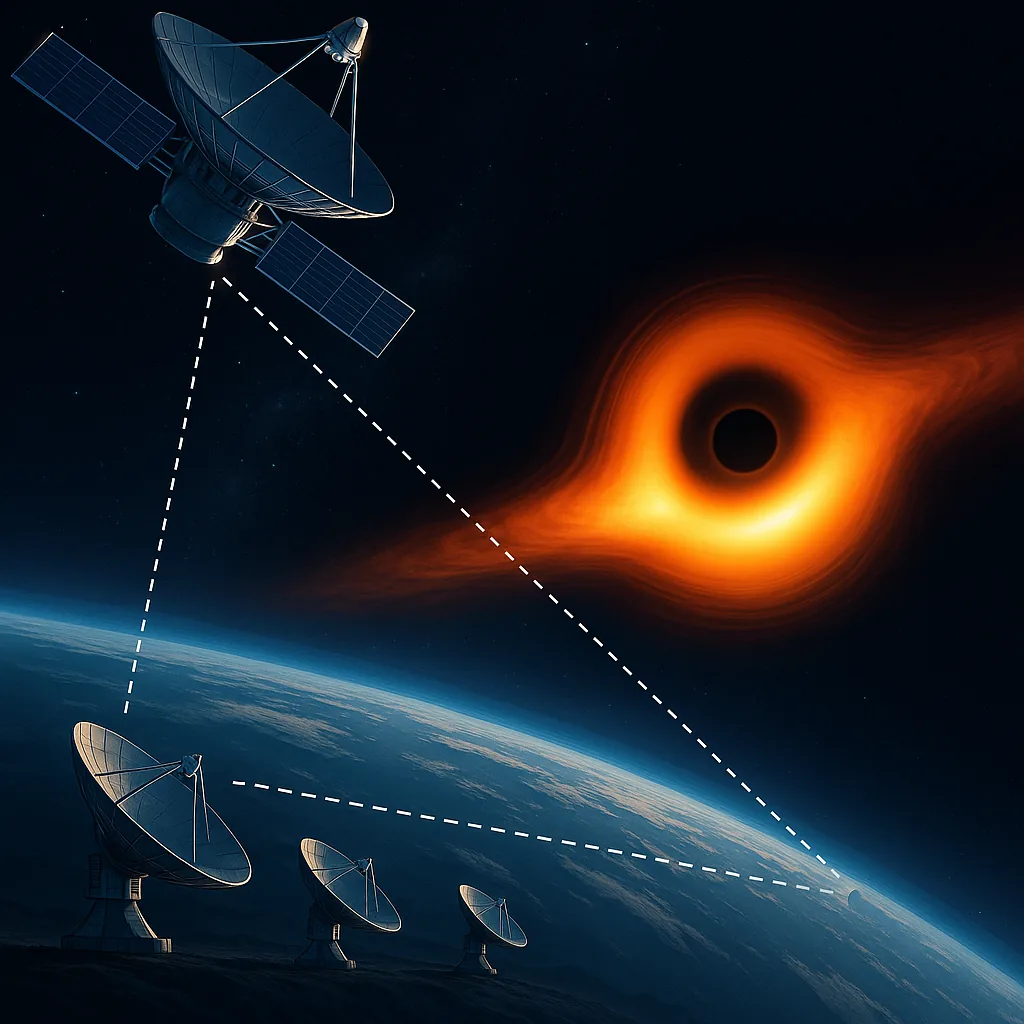
Концепция миссии направлена на получение изображения тончайшего фотонного кольца вокруг черных дыр
Фотонное кольцо — это чрезвычайно узкая орбитальная структура света, который проходит по касательной к черной дыре, прежде чем устремиться к удаленным наблюдателям. Обнаружение и разрешение этого кольца обеспечило бы прямое зондирование геометрии пространства-времени вблизи горизонта событий и позволило бы провести высокоточные проверки общей теории относительности.
Что такое фотонное кольцо (простыми словами)
Фотонное кольцо состоит из световых лучей, совершивших одну или несколько частичных или полных орбит вблизи черной дыры перед попаданием в телескоп. Его радиус и форма зависят в первую очередь от массы черной дыры, ее спина и окружающего пространства-времени, а не от деталей излучающего газа, поэтому эта структура несет в себе надежную информацию о компактном объекте.
Ученый, превращающий это в миссию
Alex Lupsasca, физик-теоретик, изучавший свойства фотонного кольца, является активным сторонником его прямого визуализирования. Он утверждает, что подтверждение наличия кольца и доказательство его орбитально-фотонного происхождения стало бы убедительным свидетельством того, что наблюдаемый компактный объект ведет себя как черная дыра, описанная общей теорией относительности. Он является научным сотрудником проекта предложенной концепции миссии, в рамках которой радиотелескоп на околоземной орбите будет работать в связке с наземными решетками для достижения гораздо большей разрешающей способности.
Почему существующих решеток недостаточно
Наземная радиоинтерферометрия со сверхдлинными базами (РСДБ) объединяет радиоантенны по всей Земле, имитируя телескоп размером с планету, и уже позволила получить первые изображения масштаба горизонта событий. Однако ширина фотонного кольца на соответствующих миллиметровых и субмиллиметровых длинах волн намного меньше углового разрешения современных решеток. Кольцо не только очень узкое, оно также обладает меньшим потоком, чем более широкое излучение, что делает его уязвимым для небольших ошибок калибровки, атмосферного шума и разреженности покрытия баз. Вывод баз в космос и улучшение дискретизации функции видимости интерферометра — наиболее очевидный путь к разрешению этой тонкой субструктуры.
От чертежа к базе: Black Hole Explorer
Концепция Black Hole Explorer (BHEX) предполагает запуск скромной радиоантенны на среднюю околоземную орбиту для объединения с наземными миллиметровыми решетками. Работая в диапазоне примерно от 100 до 300 гигагерц, одиночный спутник увеличит максимальную длину базы и заполнит пробелы в покрытии. Улучшенная дискретизация в Фурье-области повышает разрешающую способность и чувствительность к слабым высокочастотным осцилляциям, создаваемым фотонными подкольцами. Планировщики миссии наметили запуск на начало 2030-х годов и нацелены на наблюдение двух наиболее доступных объектов: сверхмассивной черной дыры в галактике M87 и черной дыры в центре Млечного Пути.
Как тонкая линия проверяет фундаментальную физику
Поскольку геометрия фотонного кольца слабо зависит от деталей излучения, его измеренный радиус и форму можно сравнить с предсказаниями для керровской черной дыры. Отклонения могут указывать на новую физику или неожиданную структуру вблизи горизонта. Недавние теоретические работы прояснили, какие наблюдаемые параметры — такие как коэффициенты уменьшения яркости между подкольцами, временные задержки и угловая структура, связанная со спином и наклонением, — могут служить диагностикой отклонений от решения Керра.
Между теорией и практикой: сигнал, поляризация и шум
Даже при наличии адекватных баз остаются практические проблемы. Субизображения, формирующие фотонное кольцо, могут интерферировать; поляризация может снижаться в зависимости от геометрии магнитного поля; а перенос излучения через турбулентную плазму может размывать детали. Моделирование, сочетающее общерелятивистскую магнитогидродинамику с переносом излучения, показывает, что фотонное кольцо может быть относительно деполяризовано в некоторых режимах излучения, но также и то, что его видимость на определенных базах несет предсказуемые признаки. Эти предсказания моделей определяют график работы баз и стратегии анализа данных для выделения слабого сигнала кольца.
Что будет означать успех
Разрешение фотонного кольца переведет визуализацию черных дыр из качественных снимков в плоскость прецизионных измерений. Обнаруженное кольцо позволит более точно определять массу и спин, проводить более строгие проверки того, соответствует ли пространство-время вблизи горизонта метрике Керра, а также проводить динамические исследования, основанные на тайминге сигналов подколец. Накопление временных сигнатур может выявить задержки прохождения света и движение вблизи фотонной орбиты — измерения, которые зондируют гравитацию в ее самом экстремальном режиме.
Долгосрочная перспектива
Визуализация фотонного кольца технически сложна и требует постоянных инвестиций в оборудование, тесной координации между космическими и наземными активами, а также непрерывного взаимодействия между теорией и наблюдениями. Тем не менее, моделирование и теория интерферометрии теперь очерчивают конкретные цели, а концепции миссий показывают правдоподобные способы построения необходимых баз. Для сторонников проекта эта кампания является логичным следующим шагом: не просто получить изображение силуэта черной дыры, но и расшифровать геометрический отпечаток, оставленный светом, скользящим у самого горизонта.




Comments
No comments yet. Be the first!