О чем объявили ученые — и почему заголовки назвали это «историческим событием»
В декабре 2022 года исследователи из Ливерморской национальной лаборатории имени Лоуренса (LLNL) Министерства энергетики США сообщили о знаменательном лабораторном результате: в эксперименте по инерциальному термоядерному синтезу было получено больше энергии термоядерного синтеза, чем энергия лазера, доставленная к крошечной топливной капсуле. Это состояние давно называют «зажиганием». В ходе эксперимента было высвобождено примерно 3,15 мегаджоуля энергии синтеза из примерно 2,05 мегаджоуля лазерного излучения, направленного на дейтерий-тритиевую капсулу — наглядная демонстрация того, что управляемый синтез может, пусть и кратковременно, производить чистую энергию на уровне мишени. За этим объявлением последовали дополнительные эксперименты, в которых этот порог неоднократно достигался или превышался, что превратило разовый успех в воспроизводимый научный режим. (llnl.gov)
Как устроен эксперимент NIF простыми словами
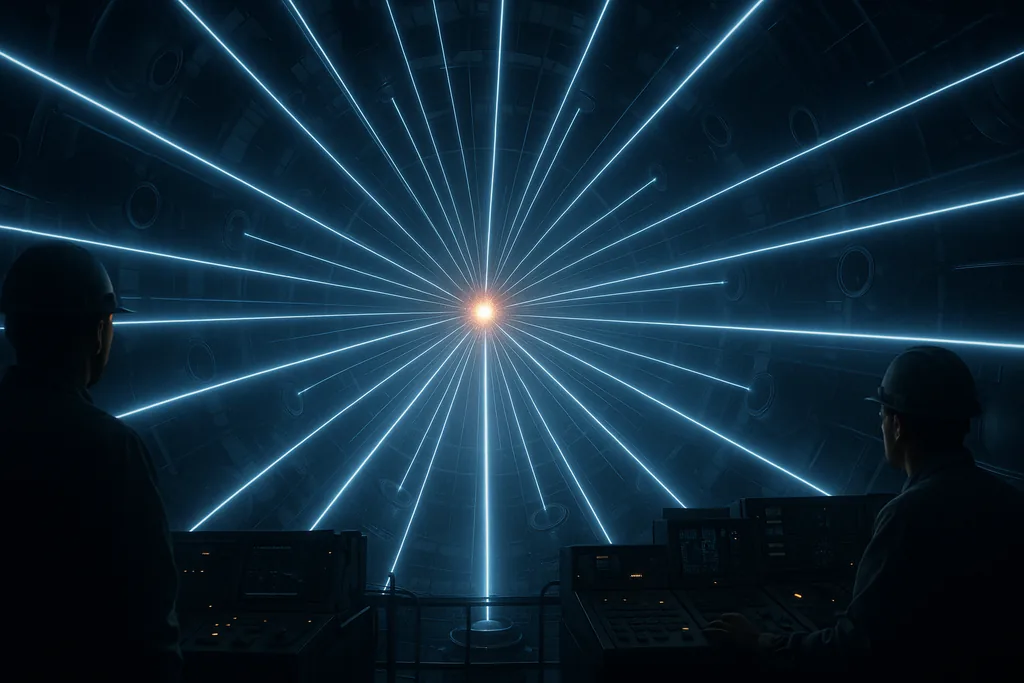
В установке National Ignition Facility (NIF) массив из 192 мощных лазерных лучей облучает топливную капсулу миллиметрового масштаба внутри золотого «хольраума». Лазерный импульс нагревает хольраум, генерируя рентгеновское излучение, которое вызывает имплозию капсулы и сжимает дейтерий-тритиевое топливо до тех пор, пока температура и давление не станут достаточно высокими для протекания реакций синтеза. В ходе реакции синтеза образуются альфа-частицы и нейтроны; эффект нагрева от альфа-частиц может затем на мгновение усилить горение — этот кратковременный саморазогрев исследователи называют «горящей плазмой», и при благоприятных условиях он приводит к зажиганию. (llnl.gov)
Важный прогресс — NIF продолжает повышать выход энергии
LLNL не только однажды продемонстрировала зажигание. В течение последующих месяцев и лет команда сообщала о множестве запусков, в которых было достигнуто зажигание и стабильно более высокие показатели выхода энергии: эксперименты в 2023 и 2024 годах дали больший термоядерный выход, а LLNL публично описала рекордные запуски вплоть до 2025 года, которые вывели выход энергии мишени в диапазон нескольких мегаджоулей. В одном из экспериментов 2025 года сообщалось о выходе 8,6 МДж при лазерном импульсе примерно 2,08 МДж. Эти повторяемые результаты важны, потому что они переводят дискуссию из плоскости «может ли произойти зажигание?» в плоскость «какие условия и конструкции обеспечивают высокий, воспроизводимый коэффициент усиления?» — необходимый шаг к любой концепции производства энергии, основанной на той же физике. (lasers.llnl.gov)
Почему это открытие является научной вехой — и чем оно не является
Важно разделять два разных значения понятия «чистая энергия». Эксперименты NIF достигли получения чистой энергии по отношению к энергии, падающей на топливную капсулу — энергии, которая непосредственно воздействует на крошечную мишень и сжимает ее. Это фундаментальная научная веха: она доказывает, что при правильных условиях лабораторный синтез может высвобождать больше энергии из топлива, чем поставляет локальный драйвер. Но проектирование электростанции требует совершенно другой метрики: станция должна выдавать в сеть больше электроэнергии, чем потребляет весь объект для работы лазеров, насосов, систем охлаждения, изготовления мишеней и многого другого. Лазерная архитектура NIF использует большие усилители с накачкой от импульсных ламп с очень низким общим КПД «от розетки», поэтому электрическая энергия, необходимая для одного мегаджоульного выстрела, на порядки превышает энергию, доставленную к капсуле. Преодоление этого разрыва — инженерная задача совершенно иного масштаба. (cambridge.org)
Оставшиеся инженерные барьеры
- Эффективность драйвера и частота повторения. Электростанции нужен драйвер (лазер, пучок частиц, магнитная система), который эффективно преобразует сетевое электричество в энергию для запуска термоядерного синтеза и может срабатывать много раз в секунду. Лазеры NIF не были рассчитаны на высокую частоту повторения; текущие сценарии электростанций на инерциальном термоядерном синтезе опираются на лазеры с диодной накачкой и другие технологии, которые могут повысить КПД «от розетки» на порядки, но эти системы все еще сталкиваются с проблемами масштабирования, стоимости и надежности. (cambridge.org)
- Производство мишеней и экономика. Крошечные замороженные топливные капсулы, которые использует NIF, хрупки и дороги. Коммерческой установке инерциального синтеза потребуются серийные капсулы стоимостью в несколько центов за штуку, а также автоматизированные системы инжекции и отслеживания — огромный скачок по сравнению с сегодняшними лабораторными мишенями. (platodata.ai)
- Поставки топлива и воспроизводство трития. Большинство ближайших концепций термоядерного синтеза основаны на дейтерий-тритиевом топливе, но тритий дефицитен в природе и должен нарабатываться внутри реактора с использованием литиевых бланкетов. Проектирование, испытание и эксплуатация надежной системы воспроизводства и обращения с тритием остается одним из центральных инженерных вопросов для любого D–T реактора. (nap.nationalacademies.org)
- Материалы и нейтронное повреждение. D–T синтез высвобождает высокоэнергетические нейтроны с энергией 14 МэВ, которые будут повреждать стенки реактора и внутренние компоненты. Материалы, способные выдерживать длительную бомбардировку нейтронами высокого потока в течение десятилетий, все еще являются предметом активных исследований; ожидается, что ремонт и замена компонентов станут основными факторами стоимости и доступности. (nap.nationalacademies.org)
Пути вперед: как исследователи планируют превратить лабораторные победы в электростанции
Исследователи и компании атакуют эти проблемы по нескольким фронтам. Для инерциального синтеза ведется работа по замене неэффективных систем накачки на импульсных лампах твердотельными лазерами с диодной накачкой, которые могли бы поднять КПД «от розетки» с долей процента до нескольких или даже десятков процентов, а также по проектированию мишеней и геометрий драйверов с гораздо более высоким коэффициентом усиления, чтобы выход термоядерной энергии намного превышал затраты драйвера. Усилия по магнитному удержанию (токамаки и стеллараторы) идут по другому пути: они направлены на то, чтобы удерживать горячую плазму в течение гораздо более длительного времени и стабильно отводить тепло, что переносит инженерные задачи в плоскость непрерывной стойкости материалов и воспроизводства трития в иной конфигурации. Оба подхода — а также ряд гибридных или новых концепций — вероятно, внесут свой вклад в долгосрочные решения, не ограничиваясь одним победителем. (cambridge.org)
Что это значит для энергетики и климата
Если термоядерный синтез удастся сделать практичным, обеспечив надежные топливные циклы, долговечные материалы и благоприятную экономику, его преимущества будут неоспоримы: очень высокая плотность энергии, отсутствие выбросов углерода при эксплуатации и меньший объем накопленных радиоактивных отходов по сравнению с делением ядер. Недавняя работа в NIF превращает давний научный вопрос в нечто более близкое к инженерной программе, поскольку она доказывает физическую реализуемость в лабораторных условиях. Но инженерам еще предстоит спроектировать системы, которые превратят эту физику в киловатт-часы при стоимости и надежности, приемлемых для энергетических компаний и регуляторов — процесс, который, скорее всего, займет годы или десятилетия, а не месяцы. (llnl.gov)
Итог
Повторяющиеся эксперименты NIF по зажиганию — это подлинная веха: они демонстрируют, что управляемый синтез может производить чистую энергию на уровне мишени и что физика теперь стоит на более прочном фундаменте. Это меняет вопрос с «возможен ли термоядерный синтез?» на «как быстро мы сможем решить инженерные проблемы, которые сделают его практичным?». Ответ будет зависеть от прогресса в создании высокоэффективных драйверов, массового производства мишеней (для инерциальных подходов), надежного воспроизводства трития и новых радиационно-стойких материалов. Прогресс ускоряется, но превращение лабораторных вспышек энергии, подобной звездной, в стабильное и доступное электричество остается масштабной и достойной инженерной задачей — той, которую стремятся решить национальные лаборатории, университеты и компании по всему миру.
— Маттиас Рисберг, Dark Matter, Кёльн




Comments
No comments yet. Be the first!