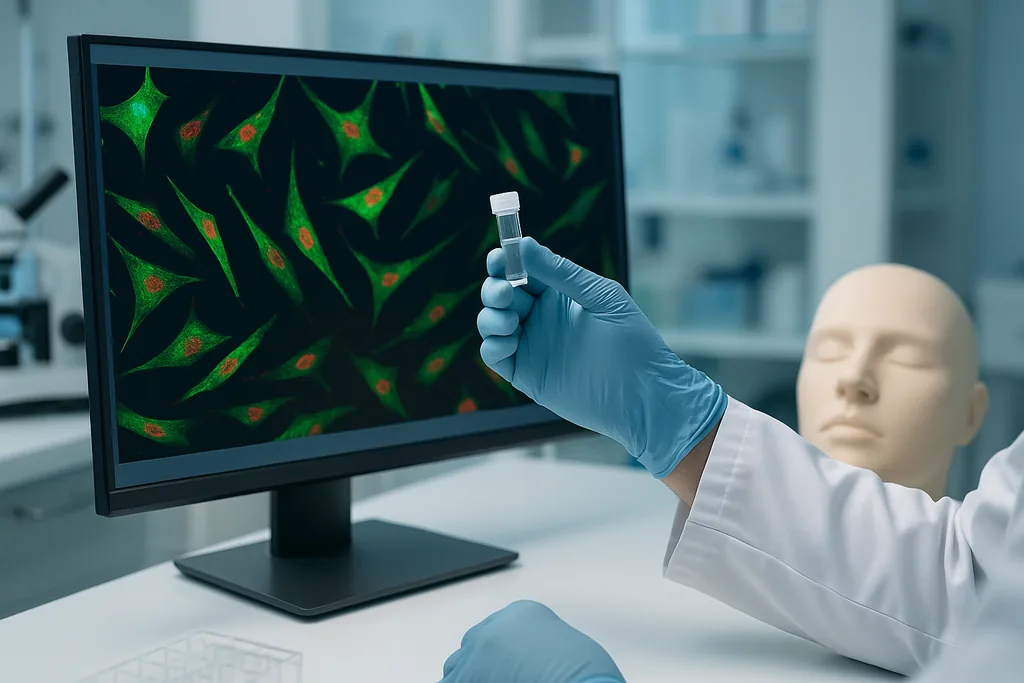
Surgeons have long noticed the same thing: a cut on the cheek looks and behaves differently from a similar wound on the abdomen. This week a team at Stanford published experimental evidence that explains why — and it points to realistic ways to turn that facial advantage into therapies for the rest of the body.
A cellular origin story
The paper's central insight is developmental: tissues that come from different embryonic lineages bring with them different repair behaviours as adults. Face and scalp skin, which derive largely from neural crest cells, host fibroblasts with a distinct gene‑expression profile. These cells express ROBO2, and their chromatin — the way DNA is packaged and made available for transcription — is less permissive at pro‑fibrotic genes such as those for collagens and cross‑linking enzymes. Put simply, facial fibroblasts are programmed not to flip the full scar‑making switch.
The Stanford team tested the idea in several ways familiar to modern wound biology: they made standardized small wounds at different body sites in mice, transplanted skin between locations, and isolated and transplanted fibroblasts. In every experiment, location‑derived identity travelled with the cells. Skin or fibroblasts taken from faces carried the low‑scar phenotype even when placed on a back. And remarkably, converting a small fraction of local fibroblasts to a facial‑like state — about 10–15% — tipped the whole wound response toward regeneration rather than fibrosis.
Switching the molecular toggle: ROBO2 and EP300
Digging into mechanisms, the researchers identified ROBO2 as part of a signalling chain that reduces EP300 activity. EP300 is a chromatin‑modifying coactivator that helps open up DNA and enable gene expression. In fibroblasts from trunk skin, EP300 activity makes pro‑scar genes available and drives the collagen‑rich, stiff tissue we call scar. In facial fibroblasts, ROBO2 activity restrains EP300 and keeps those pro‑fibrotic genes under tight control.
That mechanistic connection matters because EP300 is already a target in other clinical areas. Small‑molecule inhibitors of EP300 have been developed and entered trials for cancer. The Stanford team repurposed one such compound in mice and showed that local inhibition of EP300 in trunk wounds produced facial‑like healing: less scarring and reduced expression of fibrosis‑associated proteins. The result does not require wholesale replacement of the tissue's fibroblast population; a local pharmacological nudge is sufficient to reprogram the healing cascade.
Drugs, creams and clinical clues
The Stanford findings join another, complementary line of translational work that is already in humans. A topical drug known as SNT‑6302, developed to inhibit lysyl oxidase enzymes that over‑crosslink collagen, passed a Phase 1 safety study and reduced lysyl oxidase activity in mature scars. Researchers reported increased microvascular density and remodelling consistent with less rigid scarring. That study, published in Science Translational Medicine, suggests a different — but compatible — route to improve scar quality: inhibit the biochemical steps that harden and stabilize scar collagen rather than changing fibroblast identity itself.
Viewed together, the two approaches illustrate a pragmatic future: one can either alter the cell's transcriptional programme (ROBO2 → EP300) or modify the biochemical aftermath (lysyl oxidase inhibitors) to reduce scarring. Both strategies have advantages. EP300 inhibition leverages an upstream regulatory hub that could work across tissues, including internal organs where fibrosis causes major disease; topical LOX inhibitors are already through early human testing and may be easier to deploy for skin scars.
Beyond aesthetics: internal fibrosis and surgery
The implications for surgery and reconstructive medicine are striking. Plastic‑surgery teams and aesthetic specialists have pursued scar‑sparing techniques for decades; regenerative, scarless healing would shift the field from hiding or revising scars to preventing them. Vogue's reporting on the future of plastic surgery — which discusses scarless techniques, stem‑cell approaches and AI‑guided therapies — frames this scientific work as a concrete mechanistic foundation for trends that until now have been more speculative.
Limitations, risks and the road ahead
Caution is essential. The Stanford experiments are primarily in mice, and developmental lineage and repair programs can differ between rodents and humans. EP300 plays multiple roles in cell biology and is implicated in cancer; systemic inhibition is not without risk. The study used localized delivery and genetic tools, and translating that to safe, controllable human treatments will require careful pharmacology and long‑term toxicity studies. Similarly, the lysyl oxidase inhibitor cream showed safety in Phase 1 but produced skin irritation in some participants; larger trials will be needed to prove efficacy and durability.
There are also societal questions. If scarless healing becomes feasible, how will access, cost and cosmetic demand shape deployment? Advances in regenerative medicine can improve outcomes for trauma and disease, but they can also feed markets for elective aesthetics. As Vogue and other commentators note, the ethical, regulatory and equity dimensions should follow the science rather than lag behind it.
For now the scientific picture is unusually neat: a developmental origin (neural crest) imprints a transcriptional state (ROBO2‑positive fibroblasts) that restrains EP300‑mediated activation of pro‑scar genes, and shifting that balance in adult tissue moves wounds into a more regenerative mode. In mice the lever is strong and partial reprogramming is sufficient. Whether clinicians can flip that same lever in people safely and effectively is the next and crucial question — one that requires coordinated work from basic labs, drug developers and clinical teams.
Sources
- Cell (research paper: Griffin MF, Li DJ, Chen K, et al. Fibroblasts of disparate developmental origins harbor anatomically variant scarring potential)
- Stanford Medicine press materials (summary and experimental details on fibroblast lineage and ROBO2/EP300 findings)
- Science Translational Medicine (clinical trial report on SNT‑6302, topical lysyl oxidase inhibitor)
- University of Western Australia / Fiona Stanley Hospital (Phase 1 trial of SNT‑6302)



Comments
No comments yet. Be the first!