Scientists discover switch that revives exhausted cancer-fighting T cells
This week, researchers published an atlas-guided study showing that scientists discover switch that can flip exhausted CD8 "killer" T cells back into effective tumor killers while preserving long-term immune protection. The work, led from the Salk Institute in collaboration with UNC Lineberger and UC San Diego and published in Nature, built a detailed genetic map of CD8 T cell states and used it to identify transcription factors whose loss restored cytotoxic function. Remarkably, disabling two previously unlinked genes—ZSCAN20 and JDP2—reinvigorated exhausted T cells in mouse models and separated the pathways that produce durable memory from those that drive dysfunction.
scientists discover switch that revives exhausted T cells: building the atlas
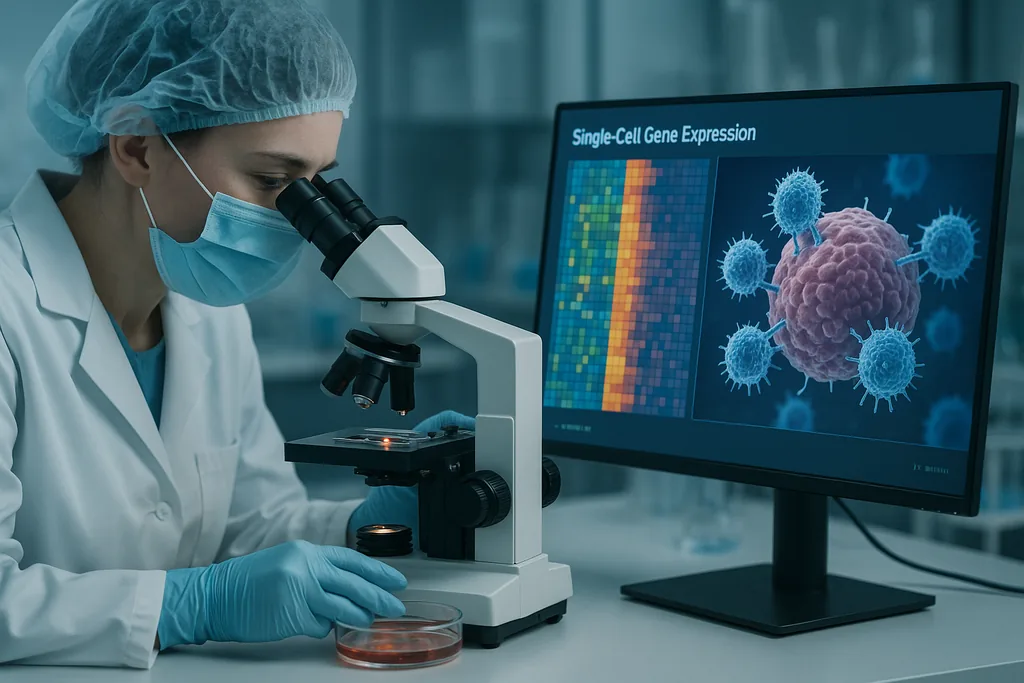
Methodologically, the study fused experimental immunology with computational modeling. Single-cell RNA sequencing and epigenomic profiling exposed the molecular signatures of each state, while targeted genetic perturbations tested causal roles. The integrated approach allowed the researchers to move from observation to intervention: not just describing exhaustion, but finding the levers that control it.
scientists discover switch that separates memory from exhaustion: the ZSCAN20 and JDP2 finding
Using their atlas as a guide, the team identified several transcription factors that appeared to drive exhaustion. Two factors in particular—ZSCAN20 and JDP2—stood out because knocking them down restored effector function in exhausted T cells. In mouse tumor models, T cells lacking these genes regained the ability to kill tumor cells and produce key effector molecules while still giving rise to memory-like progeny that could protect the host later on.
This separation is important because a longstanding belief held that reinvigorating exhausted cells risked losing durable protection: stimulating function might exhaust the cells further or prevent formation of memory pools. The Nature study shows those outcomes are not inherently coupled. By disabling specific regulators of the exhaustion program, the cells regained cytotoxic potency without abandoning the gene networks that permit long-term persistence and recall. That opens a cleaner engineering strategy for adoptive cell therapies where both immediacy and durability matter.
Mechanistically, ZSCAN20 and JDP2 appear to sit in regulatory circuits that amplify transcriptional programs associated with chronic antigen exposure, sustained inhibitory signaling and epigenetic locking of exhaustion. Removing them rewires those circuits, allowing exhausted cells to reexpress effector genes and regain mitochondrial and biosynthetic fitness needed for killing. Importantly, the experiments included functional assays of tumor control and memory formation to show the dual benefit in vivo.
Mechanistic context: what causes T cell exhaustion and what the discovery reveals
T cell exhaustion arises when CD8 T cells face persistent antigen and inflammatory cues—such as in chronic viral infections and most solid tumors. Over time, repeated receptor stimulation, persistent inhibitory signals (PD-1 and other checkpoint receptors), metabolic stress, and changes in chromatin landscape push cells into a hypofunctional state marked by reduced cytokine production, poor proliferation and altered homing. Exhaustion is stabilized by transcriptional and epigenetic programs that have been difficult to reverse with drugs alone.
The atlas-guided approach in the new study clarifies that exhaustion is the product of specific transcriptional regulators and network interactions, not an irreversible terminal fate for every T cell. In other words, some molecular components act as switches that bias the cell toward a locked, exhausted identity. Identifying those components—particularly ones that can be modified without erasing memory potential—gives researchers precise targets to reprogram T cells for therapy.
Implications for immunotherapy and engineered T cell design
For clinicians and biotechnologists, the practical promise is substantial. Adoptive cell transfer (ACT) and CAR T cell therapies have been transformational in blood cancers but struggle in most solid tumors largely because infused T cells rapidly encounter hostile microenvironments and become exhausted. An atlas that tells designers which regulators to suppress could be used to engineer cells with built-in resistance to exhaustion, or to program transient modulations that restore function at critical moments during therapy.
Risks, safety concerns and the path to the clinic
Turning a discovery into a therapy requires caution. Reactivating exhausted T cells could amplify desirable tumor killing but also increase the risk of collateral damage: autoimmunity, tissue inflammation, or severe cytokine release syndromes are real safety concerns. The tumor microenvironment contains many immunosuppressive elements beyond transcriptional regulators—metabolic constraints, suppressive myeloid cells, and stromal barriers—that could blunt benefits or cause unpredictable responses.
Translational steps should include rigorous preclinical safety testing in diverse animal models, incorporation of controllable gene circuits (so activity can be dialed down if needed), and careful patient selection for early trials. Regulators will want evidence that memory is preserved and off-target effects are minimized. The Nature study makes a compelling mechanistic case, but human tumors and human T cells remain the crucial proving ground.
Next steps and time frame
Ultimately, the atlas-guided model offers a conceptual shift: instead of broadly stimulating T cells and hoping exhaustion does not follow, designers can program cells to retain resilience while unleashing their killing power. That degree of precision matters for solid tumors and chronic infections where improving outcomes depends on nuanced control of immune fate.
The discovery answers central questions patients and clinicians have asked for years: what is the switch that revives exhausted T cells, how reversing exhaustion can boost immunotherapy, what causes exhaustion, and what safety trade-offs exist. The study does not claim an immediate cure, but it establishes a clear experimental route toward engineered immune cells that are both potent and long-lived.
Sources
- Nature (research paper: Atlas-guided discovery of transcription factors for T cell programming)
- Salk Institute press materials
- UNC Lineberger Comprehensive Cancer Center
- University of California San Diego
- National Institutes of Health (funding acknowledgements)




Comments
No comments yet. Be the first!