
What are solar radio bursts and why do they matter?
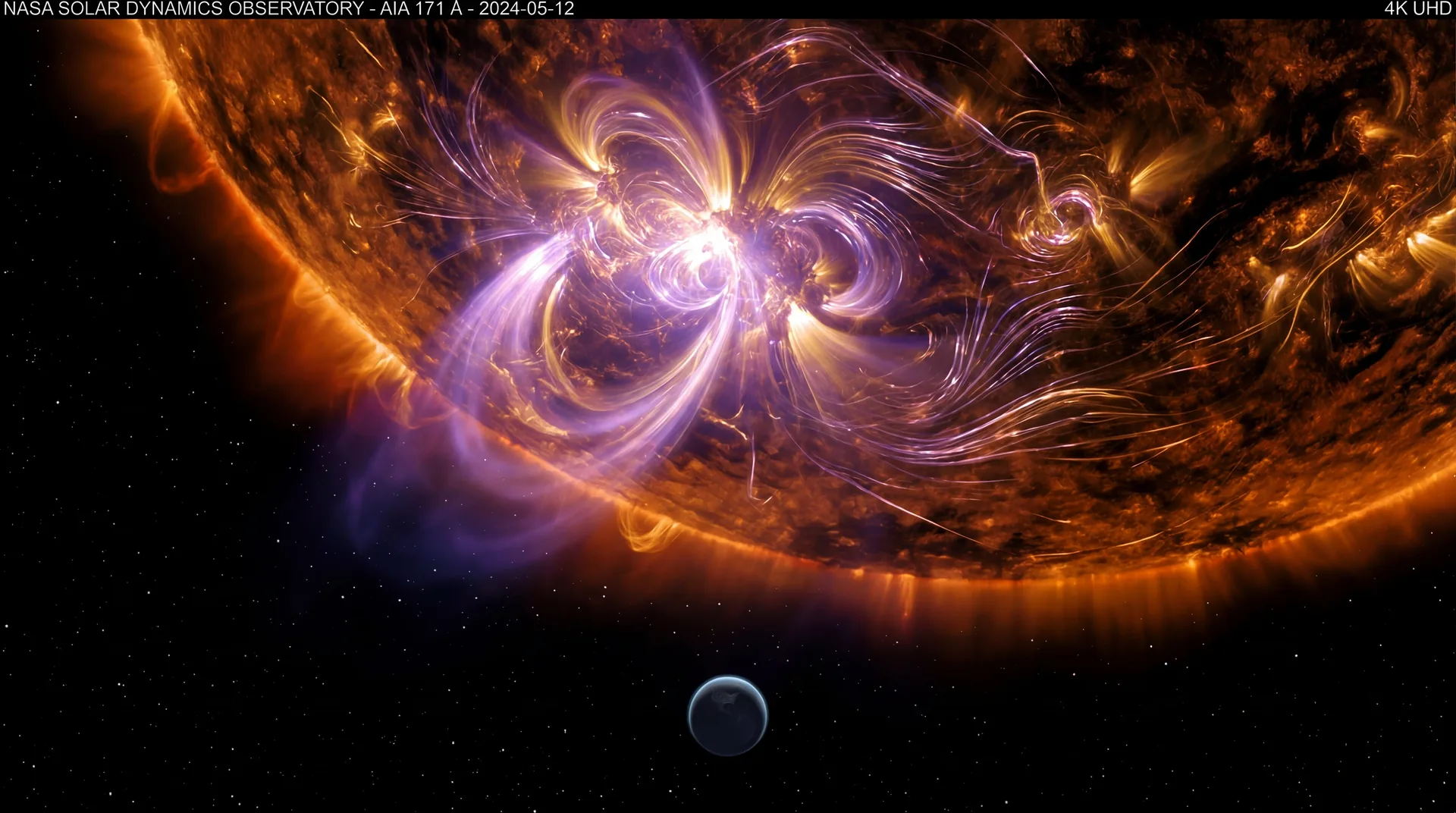
Solar radio bursts are intense electromagnetic emissions from the Sun caused by the movement of energetic electrons during solar flares and coronal mass ejections. These phenomena are critical because they serve as immediate indicators of space weather events that can disable satellite communications, interfere with GPS navigation, and disrupt electrical power grids across the globe without prior warning.
Space weather monitoring has long faced a significant challenge: the speed at which solar activity affects Earth. When the Sun undergoes a major eruptive event, it releases high-energy particles and radiation that can reach our planet in a matter of minutes. Traditional monitoring systems often involve manual data processing, which introduces a delay that is too long for practical emergency mitigation. To address this, researchers Bin Chen, Mengjia Xu, and Gregg Hallinan have developed a groundbreaking automated system at the Owens Valley Radio Observatory (OVRO) to detect these bursts in near-real-time.
Type III radio bursts are particularly significant as they are among the most common and intense signatures of solar activity. These bursts are generated by electron beams traveling through the solar corona and into interplanetary space. By tracking these signals, scientists can gain coronal diagnostics that reveal the early stages of solar eruptions. Monitoring the corona is essential for protecting Earth’s technological infrastructure, as it provides the earliest possible data on the trajectory and intensity of incoming solar storms.
How does the YOLO algorithm detect solar flares?
The YOLO (You Only Look Once) architecture detects solar flares by processing radio dynamic spectrograms as visual data to identify the unique shapes of Type III radio bursts. This deep-learning framework allows the system to analyze entire spectrograms in a single pass, providing the low-latency detection required to report solar activity within just 10 seconds of its occurrence.
Deep-learning-based burst identification represents a major shift from manual analysis. In the past, researchers had to manually inspect spectrograms—visual representations of radio frequency over time—to identify solar events. This was not only time-consuming but also prone to human error. The new system, implemented via the Owens Valley Radio Observatory Long Wavelength Array (OVRO-LWA), automates this process by clipping data from a real-time buffer and streaming it directly into the YOLO-based identifier.
Synthetic data training was a crucial component in making this AI model robust. Because high-quality, labeled data of rare solar events can be scarce, the researchers used a physics-based model to generate synthetic Type III bursts. By training the AI on these simulated examples, the team ensured the system could accurately distinguish between genuine solar activity and terrestrial radio frequency interference. This approach results in a highly reliable automated reporting system that maintains sensitivity even in "noisy" radio environments.
What is the importance of low-latency space weather monitoring?
Low-latency space weather monitoring is vital because it provides the rapid response window needed for infrastructure operators to protect sensitive electronics from solar-induced surges. Real-time recording and reporting allow for immediate alerts to be sent to satellite constellations and power grid managers, enabling them to initiate safety protocols before the peak of a solar storm arrives.
High-sensitivity radio recording capabilities at the OVRO-LWA ensure that even weak signals are captured before they escalate. The transition from human-in-the-loop systems to fully automated reporting bridges the gap between astronomical research and practical emergency management. As the world becomes increasingly dependent on satellite-linked technology, the ability to cut reporting times from hours to seconds is a necessary evolution in heliospheric science.
Automated alerts generated by the system can serve as a first line of defense for a variety of industries. For instance, airline operators can use this data to reroute flights away from polar regions where radiation exposure and communication blackouts are most severe during solar events. Similarly, satellite operators can temporarily power down sensitive components to prevent permanent hardware damage from energetic particles accelerated by the Sun.
Future Directions for AI-Driven Solar Observations
Multi-type burst tracking is the next logical step for this research. While the current system focuses on Type III bursts, future iterations of the AI identifier aim to track multiple types of solar radio bursts simultaneously. This would provide a more holistic view of solar eruptive processes, including the movement of shocks through the solar atmosphere, which are associated with Type II bursts.
Global sensor networks could eventually integrate this YOLO-based architecture to provide 24/7 coverage of the Sun. Because a single observatory can only monitor the Sun when it is above the horizon, a distributed network of arrays like the OVRO-LWA would ensure that Earth is never blind to solar threats. This work establishes a scalable blueprint for future space weather forecasting platforms that combine radio astronomy with advanced machine learning.
Current Aurora and Space Weather Status
Quiet solar conditions are currently being observed, with a Kp index of 0 recorded as of March 27, 2026. This indicates minimal geomagnetic activity, meaning that aurora visibility is currently limited to the highest Arctic latitudes. For those interested in witnessing the Northern Lights during these quiet periods, the following data applies:
- Visible Regions: Currently limited to Tromsø, Norway.
- Visibility Latitude: 66.5 degrees North.
- Intensity Level: Quiet (Aurora limited to Arctic regions).
- Viewing Tips: For the best experience, find a location away from city lights between 10 PM and 2 AM local time. Check for clear skies and look toward the northern horizon.
Technological resilience against solar activity remains a priority for international space agencies. Even during quiet periods, the deployment of systems like the one at Owens Valley Radio Observatory ensures that we are prepared for the sudden onset of the next solar cycle. By leveraging AI-powered detection, scientists are finally gaining the upper hand in the race against the Sun's unpredictable behavior.





Comments
No comments yet. Be the first!