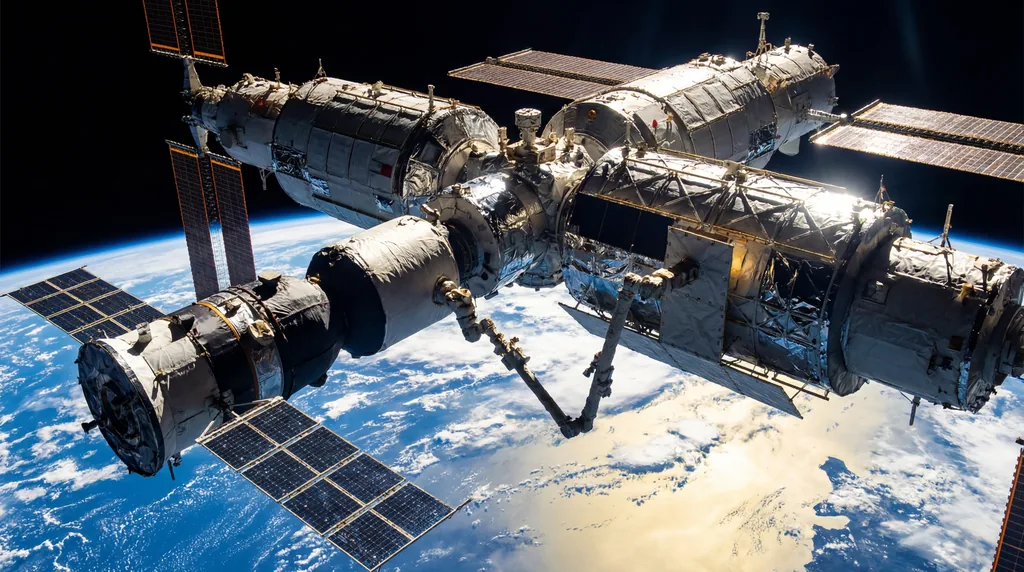

In a landmark demonstration of emergency orbital operations, China’s Shenzhou-20 spacecraft has successfully returned to Earth following a critical impact with suspected space debris. The return module touched down at the Dongfeng landing site in the Gobi Desert at 8:24 p.m. Eastern on January 18, 2026, marking the conclusion of the most significant contingency operation in the history of the Tiangong Space Station. This mission represents the first time a crewed Chinese spacecraft has successfully navigated a reentry sequence after sustaining a documented breach of its outer structural layers, setting a new precedent for deep-space survival protocols and orbital repair capabilities.
Return to Earth: The Shenzhou-20 Touchdown
The touchdown at the Dongfeng landing zone, located near the Jiuquan Satellite Launch Center, was the culmination of months of rigorous risk assessment and engineering ingenuity. Upon landing, images released by the China Manned Space Engineering Office (CMSEO) showed the return module in an upright position. While the exterior of the module appeared generally normal, the viewport window—the site of the suspected impact—was immediately covered by recovery teams to protect the integrity of the forensic evidence. Initial reports from ground teams confirm that the spacecraft’s internal systems remained stable throughout the high-thermal loads of reentry, and the cargo returned from the station was found to be in excellent condition.
The safe return of the vehicle is a significant relief for the China National Space Administration (CNSA), as the spacecraft had been stationed in orbit for a total of 270 days—nearly three months longer than the standard 180-day mission duration. This extended stay was a direct result of the safety concerns raised by the discovery of a penetrating triangular crack in the outermost layer of the three-layer viewport window. The successful atmospheric interface and subsequent parachute deployment demonstrated that the internal repairs performed by the crew were sufficient to withstand the extreme mechanical stresses and thermal gradients of the descent.
The Incident: Suspected Orbital Debris Impact
The crisis began during a final pre-return check when the Shenzhou-20 crew identified the structural anomaly. Commander Chen Dong reported the discovery after a visual inspection revealed a triangular fracture in the viewport. "We took photographs right away and recorded the situation, and immediately transmitted the data back to the ground," Chen stated during a post-mission briefing. He noted that while the crack had fully penetrated the outer layer of the window, the secondary and tertiary pressure-bearing layers remained intact, allowing the crew to continue their stay safely while a solution was devised.
This incident underscores the growing threat of hypervelocity micro-debris in Low Earth Orbit (LEO). As orbital lanes become increasingly crowded, even microscopic particles traveling at speeds exceeding 7 kilometers per second can carry enough kinetic energy to compromise spacecraft shielding. While the Tiangong station is equipped with robust debris monitoring and avoidance systems, small and medium-sized debris often fall below the detection threshold of ground-based radar, necessitating a shift toward reactive repair capabilities and "fail-safe" structural designs.
Unprecedented On-Orbit Repairs
The repair of the Shenzhou-20 was a collaborative effort between the Tiangong crew and ground-based engineers at the China Aerospace Science and Technology Corporation (CASC). Because an external repair via Extravehicular Activity (EVA) was deemed too risky due to the fragility of the damaged area, the decision was made to perform an internal patch. This involved applying a specialized sealing material and a structural patch, which were delivered to the station by the uncrewed Shenzhou-22 "lifeboat" spacecraft in November 2025. The patch was specifically designed to enhance the window’s heat protection and sealing capabilities for the duration of the reentry sequence.
Shao Limin, a representative from CASC, explained that the strategy focused on reinforcing the structural integrity of the window assembly from the inside. The astronauts, including Zhang Lu and Wu Fei, conducted a series of inspections to ensure that the patch would hold under the pressure differentials experienced during the transition from vacuum to atmosphere. This methodology highlights a significant evolution in orbital maintenance; rather than abandoning a compromised vessel, the CNSA demonstrated that complex structural repairs could be executed in situ, leveraging the presence of a modular space station as a repair hub.
Future Operations: Shenzhou-23 and Beyond
In response to the Shenzhou-20 emergency, China has significantly accelerated its production and launch timelines to restore its emergency backup capabilities. On January 19, 2026, the Shenzhou-23 spacecraft arrived at the Jiuquan spaceport, nearly two months ahead of its original schedule. This rapid deployment is intended to re-establish a "standby" launch vehicle that can be deployed within days should another crisis occur on Tiangong. Furthermore, the Long March 2F rocket destined to carry Shenzhou-23 is expected to leave the factory shortly, with the manufacture of Shenzhou-24 also being fast-tracked for completion by the summer of 2026.
The upcoming missions are set to push the boundaries of China’s space program even further. Plans for 2026 include the launch of the Tianzhou-10 cargo ship and two crewed missions. Notably, the Shenzhou-24 mission may host the first international astronaut aboard the Tiangong station, likely a representative from Pakistan. This mission structure would also facilitate China's first continuous one-year duration spaceflight for a single astronaut, as one member of the Shenzhou-23 crew is expected to remain in orbit for a full twelve-month cycle, bridging the handover period between rotations.
Industry Implications and Global Safety Standards
The successful recovery of Shenzhou-20 has profound implications for the international space community. As more nations and private entities move toward long-term orbital habitation, the "Kessler Syndrome"—a theoretical scenario where the density of objects in LEO is high enough that collisions trigger a cascade of further debris—becomes a more pressing concern. The CNSA’s ability to manage a hull-breach crisis in real-time provides a blueprint for rapid-response orbital repair that could be integrated into international safety standards.
Furthermore, the incident highlights the necessity for modularity in spacecraft design. The fact that the Shenzhou-20 crew was able to swap their return vehicle for the Shenzhou-21, while utilizing the Shenzhou-22 as a temporary lifeboat, demonstrates a sophisticated level of logistics and interoperability. For the global space industry, the Shenzhou-20 saga serves as a reminder that resilience in the modern space age depends not just on preventing impacts, but on the ability to survive and repair them while in the harsh environment of the vacuum.
Concluding Remarks: A New Era of Resilience
The safe return of Shenzhou-20 concludes what many experts consider the first true "orbital crisis" of the 21st-century space race. By successfully navigating the complexities of a damaged return module, China has proven the viability of its space station as a robust, long-term platform capable of sustaining human life even under adverse conditions. As the Shenzhou-23 prepares for its upcoming mission, the lessons learned from the "triangular crack" will undoubtedly influence the design of future shielding and the training of the next generation of taikonauts.
The mission also returned a piece of history: the Feitian EVA spacesuit B. This suit has supported 11 different astronauts across eight crewed missions and 20 successful spacewalks since 2021. Its return, alongside the damaged return module, marks the end of an era of initial construction and the beginning of a new phase of high-stakes, operational resilience in Earth's orbit. The focus now shifts to the Jiuquan launch pads, where the accelerated arrival of Shenzhou-23 signals that China intends to maintain its permanent presence in space, regardless of the debris that may cross its path.





Comments
No comments yet. Be the first!