
NASA Targets Late January for Critical Artemis II Wet Dress Rehearsal
NASA has officially scheduled the Wet Dress Rehearsal (WDR) for the Artemis II mission to occur as early as Saturday, January 31, 2026. This announcement, made by agency officials on January 26, marks the final significant ground-based milestone before the United States sends humans back to the lunar vicinity for the first time in over five decades. The high-stakes simulation involves a comprehensive practice countdown that culminates in the full fueling of the Space Launch System (SLS) rocket, providing a definitive validation of the integrated hardware, software, and ground support systems required to ensure the safety of the four-person crew.
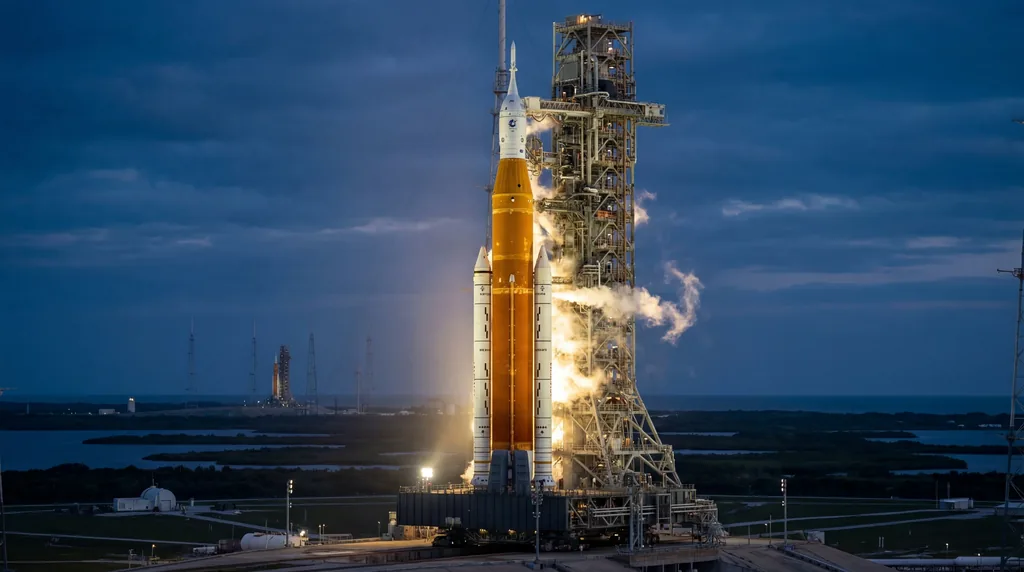
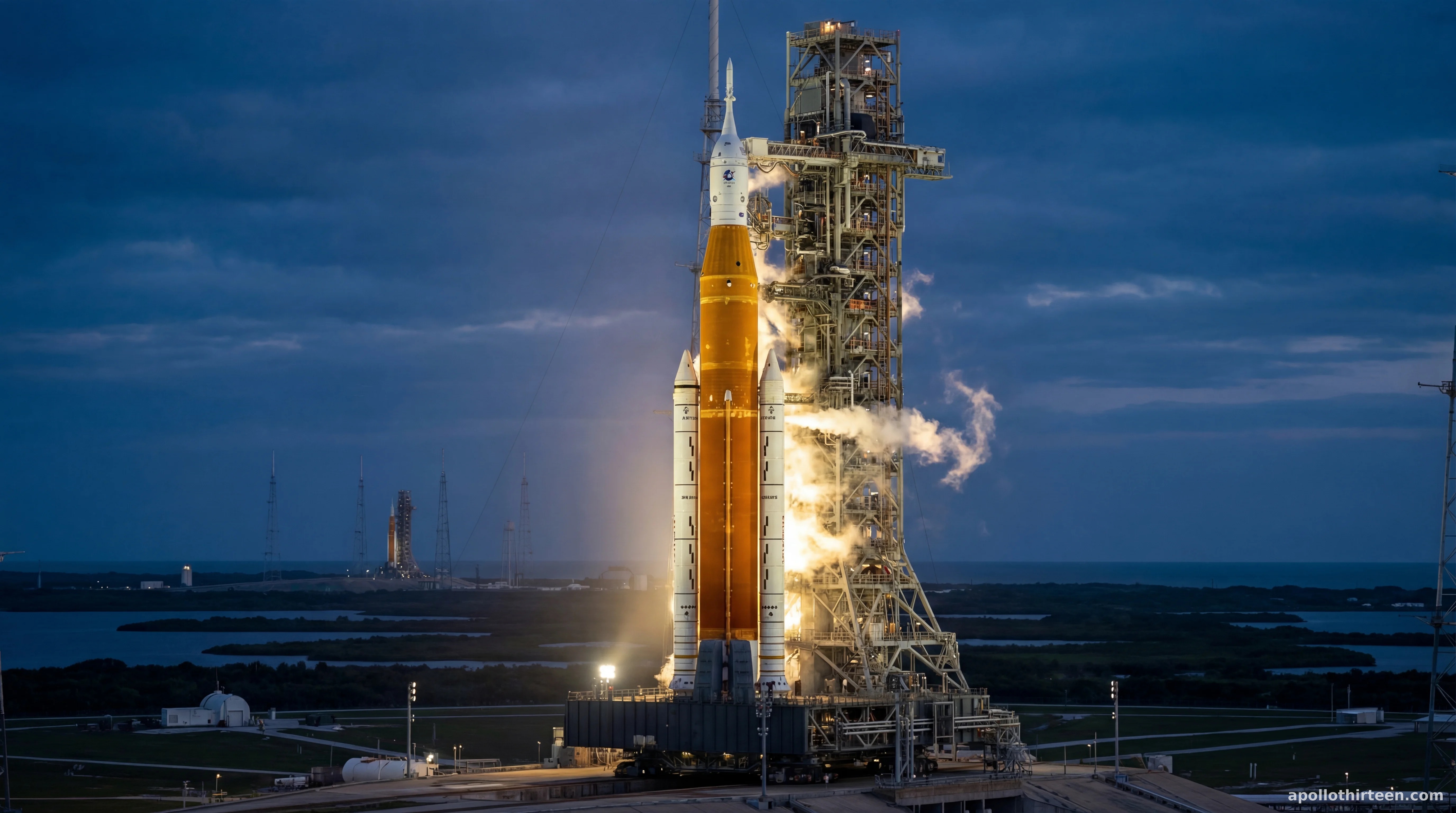
The scheduling of this rehearsal follows the successful rollout of the SLS rocket, topped with the Orion crew capsule and the Launch Abort System, to Launch Complex-39B at the Kennedy Space Center on January 17. While NASA leadership had previously targeted a window "no later than" February 2 for the rehearsal, the January 31 date aligns with the more aggressive end of their internal timeline. However, in the parlance of aerospace operations, the phrase "as early as" remains a cautious caveat. The agency maintains that a definitive launch date for the mission—tentatively projected for as soon as February 6—will not be finalized until the data from the WDR is thoroughly analyzed and the vehicle is deemed flight-ready.
The Road to January 31: Preparing the SLS and Orion Stack
The current configuration at Launch Complex-39B represents a massive multi-organizational achievement. The core stage of the SLS, an orange-hued behemoth manufactured by Boeing, is powered by four RS-25 engines from L3Harris Aerojet Rocketdyne. It is flanked by two five-segment Solid Rocket Boosters produced by Northrop Grumman. Perched atop the core stage is United Launch Alliance’s Interim Cryogenic Propulsion Stage (ICPS), which serves as the bridge to the Lockheed Martin-built Orion crew capsule. This capsule is integrated with the European Service Module, provided by Airbus Defence and Space, and the Northrop Grumman Launch Abort System. The orchestration of these diverse components is managed by Amentum, the prime contractor for Exploration Ground Systems.
The transition from the Vehicle Assembly Building (VAB) to the launch pad on January 17 was only the beginning of the current campaign. Since arriving at the pad, technicians have been performing final electrical connections and system checks. The complexity of the SLS/Orion stack necessitates a rigorous testing protocol because, unlike its predecessor Artemis I, this mission carries the added responsibility of life-support systems and manual controls for a human crew. The upcoming Wet Dress Rehearsal serves as the ultimate "dress rehearsal" to identify any latent technical issues that only manifest when the vehicle is under the stresses of cryogenic loading.
Understanding the Wet Dress Rehearsal Methodology
The Wet Dress Rehearsal is a multi-day operation that mimics the 48-hour launch countdown. The "wet" portion of the test refers to the loading of super-cold liquid hydrogen (LH2) and liquid oxygen (LOX) into the rocket’s tanks. This is a delicate procedure; the propellants must be maintained at temperatures far below zero, and the ground systems must manage the boil-off and pressure regulation within the core stage and the ICPS. The rehearsal allows the launch team to practice the synchronized timeline of propellant loading, which is one of the most hazardous and technically demanding phases of any launch.
During the simulation, the countdown proceeds exactly as it would on launch day, moving through various "holds" and system activations. The process is designed to run until the T-minus 10-second mark, just before the four RS-25 engines would normally ignite. At this point, the simulation is halted, and the team practices "safing" the vehicle. This involves the complex process of draining the propellants back into storage spheres—a procedure that is arguably as critical as the loading itself, as it ensures the vehicle can be safely serviced in the event of a real-world launch scrub.
Environmental Constraints and Historical Context
NASA’s timing for the WDR is also dictated by environmental factors, specifically Florida’s winter weather. Launch and fueling operations for the SLS are restricted by specific temperature thresholds to protect the integrity of the rocket’s seals and components. Engineers cannot begin "tanking" if the 24-hour average temperature is less than 41.4°F at two critical elevations on the rocket: 132.5 feet and 257.5 feet. This is not a mere bureaucratic hurdle; it is a vital safety protocol born of hard-won experience. On January 26, NASA noted that lower-than-normal temperatures were expected in the region, prompting technicians to adjust environmental control systems to protect the hardware.
The significance of these temperature constraints is underscored by the calendar. Wednesday, January 28, 2026, marks the 40th anniversary of the Space Shuttle Challenger tragedy. That disaster was caused by the failure of an O-ring on a Solid Rocket Booster—hardware shared in heritage by the SLS—due to unusually cold temperatures at the time of launch. By adhering to strict thermal limits during the Artemis II rehearsal, NASA demonstrates a continued commitment to the safety lessons learned from its history, ensuring that the cold-weather performance of the SLS boosters and seals is never pushed beyond verified safety margins.
The Artemis II Crew and Mission Objectives
While ground crews prepare the rocket, the four astronauts who will fly the mission have already entered a strict 14-day quarantine period at the Johnson Space Center in Houston. The crew includes:
- Reid Wiseman (NASA): Commander
- Victor Glover (NASA): Pilot
- Christina Koch (NASA): Mission Specialist
- Jeremy Hansen (Canadian Space Agency): Mission Specialist
This quarantine is a standard health stabilization protocol to ensure the crew does not fall ill during the mission. Although the crew is currently in isolation, their schedule remains flexible; if the WDR reveals technical issues that delay the launch beyond early February, the astronauts may exit quarantine and re-enter the protocol 14 days before the revised launch date.
The mission itself is a 10-day flight designed to test the Orion spacecraft’s life-support systems in deep space. After reaching Earth orbit, the crew will spend approximately 24 hours performing system checks before executing a Trans-Lunar Injection burn. The trajectory is a "free-return" path that will carry them around the far side of the Moon and back to Earth using lunar gravity. This trajectory is a safety-first approach; even if Orion’s primary propulsion system were to fail after the initial burn, the laws of orbital mechanics would naturally bring the capsule back into Earth's atmosphere for splashdown.
Timeline to Launch: Lessons from Artemis I
The path to a successful Artemis II launch is paved with the lessons of the uncrewed Artemis I mission in 2022. During that campaign, multiple Wet Dress Rehearsals were required over several months due to hydrogen leaks and ground equipment failures. In total, eight months elapsed between the first rollout of Artemis I and its eventual liftoff. Launch Director Charlie Blackwell-Thompson has noted that many of these lessons have been incorporated into the Artemis II planning to streamline operations, but the agency remains transparent about the possibility of setbacks.
If the January 31 WDR encounters significant anomalies, NASA may be forced to roll the SLS back to the VAB for repairs. Such a move would certainly push the launch into late February or March. The mission is also constrained by "launch windows"—specific days each month when the Earth and Moon are correctly aligned for the free-return trajectory. NASA has published a table of available windows for February, March, and April, highlighting that the timing of the WDR is the primary domino that must fall before any of these dates can be finalized.
Implications for the Future of Lunar Exploration
The successful completion of the Artemis II Wet Dress Rehearsal will signal the transition of the SLS from an experimental vehicle to an operational human-rated carrier. This mission is the penultimate step toward Artemis III, which aims to land the first woman and the first person of color on the lunar surface. By validating the ground systems and the fueling process with a human crew in mind, NASA is not just testing a rocket; it is refining the entire infrastructure required for a sustained human presence on the Moon.
As the January 31 date approaches, the eyes of the international aerospace community are on Kennedy Space Center. The Artemis II mission represents a pivotal moment in the 21st-century space race, moving beyond the low-Earth orbit operations of the International Space Station and back into the proving ground of deep space. For the crew in Houston and the engineers in Florida, the upcoming rehearsal is the final hurdle in a decade-long journey to return humanity to the lunar frontier.




Comments
No comments yet. Be the first!