
NASA Debuts Athena: A Next-Generation Supercomputer for Space Exploration and Climate Science
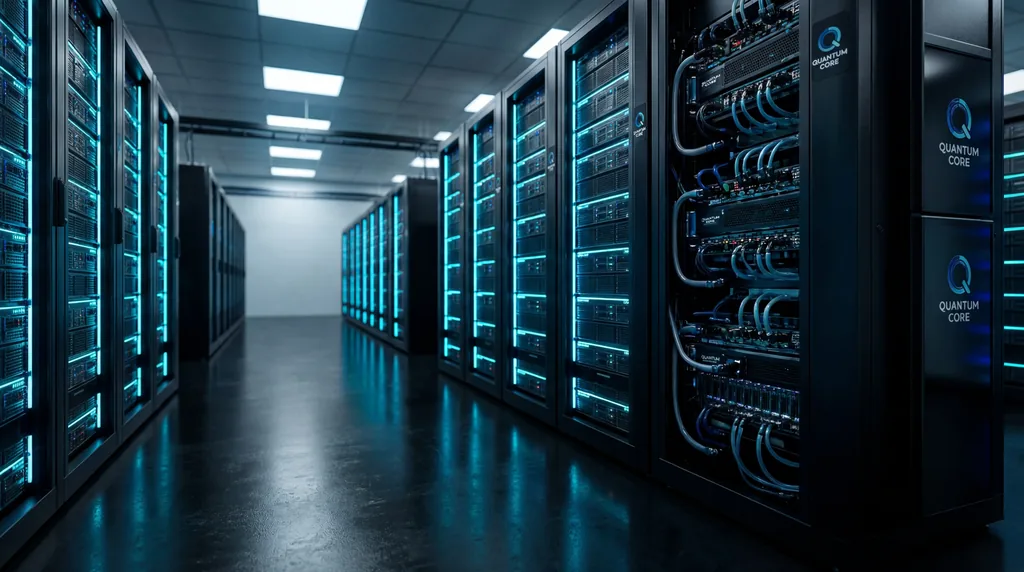
NASA has officially announced the deployment of its newest and most formidable computational asset, the Athena supercomputer. Housed at the agency’s Modular Supercomputing Facility at the Ames Research Center in California’s Silicon Valley, Athena represents a significant leap forward for the High-End Computing Capability (HECC) project. Designed to meet the escalating demands of modern aerospace and planetary science, this advanced system is now available to support a new generation of missions that require unprecedented processing power to navigate the complexities of deep space exploration and terrestrial climate analysis.
The introduction of Athena comes at a critical juncture for NASA, as the agency moves deeper into the Artemis era and expands its focus on high-fidelity Earth science. Modern research in these fields generates vast quantities of data that exceed the capabilities of traditional computing architectures. By providing a robust digital foundation, Athena ensures that scientists and engineers have the tools necessary to model complex physical phenomena—ranging from the turbulent aerodynamics of supersonic flight to the intricate variables of Martian entry, descent, and landing—with greater precision than ever before.
Technical Specifications and Operational Efficiency
Athena is not merely a successor in name but a substantial upgrade in hardware architecture and operational philosophy. Delivering over 20 petaflops of peak performance, the system is capable of executing quadrillions of calculations per second. This benchmark places it at the forefront of the agency’s computing fleet, surpassing the performance metrics of its predecessors, the Aitken and Pleiades systems. During its initial beta testing phase and subsequent January 2026 rollout, Athena demonstrated a superior ability to handle high-throughput workloads while maintaining a significantly lower energy footprint.
Operational efficiency was a primary design goal for the HECC team. By leveraging the modular infrastructure at the Ames Research Center, NASA has optimized the cooling and power delivery systems required to run a machine of this scale. This approach not only reduces the agency’s supercomputing utility costs but also aligns with broader federal initiatives for sustainable and green computing. The modular nature of the facility allows for more flexible hardware cycles, ensuring that NASA can integrate emerging technologies without the need for traditional, energy-intensive data center expansions.
Climate Modeling and Earth Science
Beyond the technical benchmarks, Athena is set to become a cornerstone of NASA’s Earth science portfolio. One of its primary applications involves facilitating high-resolution simulations of global weather patterns and long-term climate trends. As the Earth’s climate becomes increasingly volatile, the need for predictive modeling that can account for localized weather events alongside global carbon cycles is paramount. Athena’s massive throughput allows researchers to run "ensemble" models—simultaneously processing hundreds of variations of a climate scenario—to better understand the probability of extreme weather events.
These simulations are vital for disaster response and mitigation strategies. By analyzing massive datasets from Earth-observing satellites, Athena helps scientists identify subtle shifts in ocean temperatures, ice sheet thickness, and atmospheric composition. The ability to process these data streams in real-time or near-real-time provides policymakers with the high-fidelity evidence required to address environmental challenges. This computational power transforms raw satellite data into actionable insights, bridging the gap between observation and global response.
Advancing Space Exploration and Aeronautics
In the realm of space exploration, Athena’s role is inextricably linked to the success of the Artemis missions. Designing trajectories for lunar and Martian travel requires simulating millions of variables, including gravitational pulls, solar radiation, and fuel consumption. Athena provides the computational fluid dynamics (CFD) capabilities needed to refine the design of the Space Launch System (SLS) and the Orion spacecraft. These simulations allow engineers to test "digital twins" of their hardware in various flight environments, identifying potential failure points before a single piece of metal is ever forged.
Furthermore, Athena is being utilized to map the Martian terrain in unprecedented detail. Using data from the Mars Reconnaissance Orbiter and other robotic explorers, the supercomputer can generate high-resolution 3D maps that are essential for selecting safe landing sites for future crewed missions. In the field of aeronautics, Athena supports the development of next-generation commercial aircraft. Researchers use the system to model new wing designs and propulsion systems that promise to make aviation more efficient and environmentally friendly, reinforcing NASA's role in advancing "green" flight technology.
The Landscape of NASA Supercomputing
The naming of Athena, selected through a 2025 agency-wide contest, reflects its place in the NASA hierarchy. As the Greek goddess of wisdom and the half-sister of Artemis, the name underscores the system’s role as the intellectual backbone of the lunar exploration program. Within the HECC portfolio, Athena operates as part of a hybrid strategy managed by NASA’s Office of the Chief Science Data Officer. This strategy combines on-premises supercomputing with commercial cloud platforms, allowing researchers to choose the most efficient environment for their specific needs.
“Exploration has always driven NASA to the edge of what’s computationally possible,” said Kevin Murphy, chief science data officer and lead for the agency’s HECC portfolio. By integrating Athena into a broader ecosystem of computing tools, NASA ensures that its resources remain flexible. While cloud platforms are excellent for data distribution and certain types of analysis, high-performance systems like Athena remain indispensable for the intensive "heavy lifting" of large-scale physics simulations that require low-latency communication between thousands of processor cores.
Future Outlook: AI and the Role of Data in Discovery
As NASA looks toward the future, the integration of artificial intelligence (AI) and machine learning (ML) into supercomputing is becoming a central theme. Athena is specifically designed to train large-scale AI foundation models. These models can sift through decades of archival data from missions like the Hubble Space Telescope or the Parker Solar Probe to uncover anomalies and patterns that may have been missed by human researchers. This synergy between AI and high-performance computing represents a new frontier in the scientific method, where the machine helps prioritize the most promising avenues of discovery.
The legacy of the High-End Computing Capability project is defined by its ability to evolve alongside the missions it supports. With Athena now operational, the agency is laying the digital foundation for the next several decades of discovery. As missions push further into the solar system and our understanding of Earth’s systems becomes more granular, the demand for computational throughput will only increase. Athena stands as a testament to NASA's commitment to pushing the boundaries of human knowledge through the power of advanced technology, ensuring that the next "giant leap" is backed by the most sophisticated data science available.




Comments
No comments yet. Be the first!