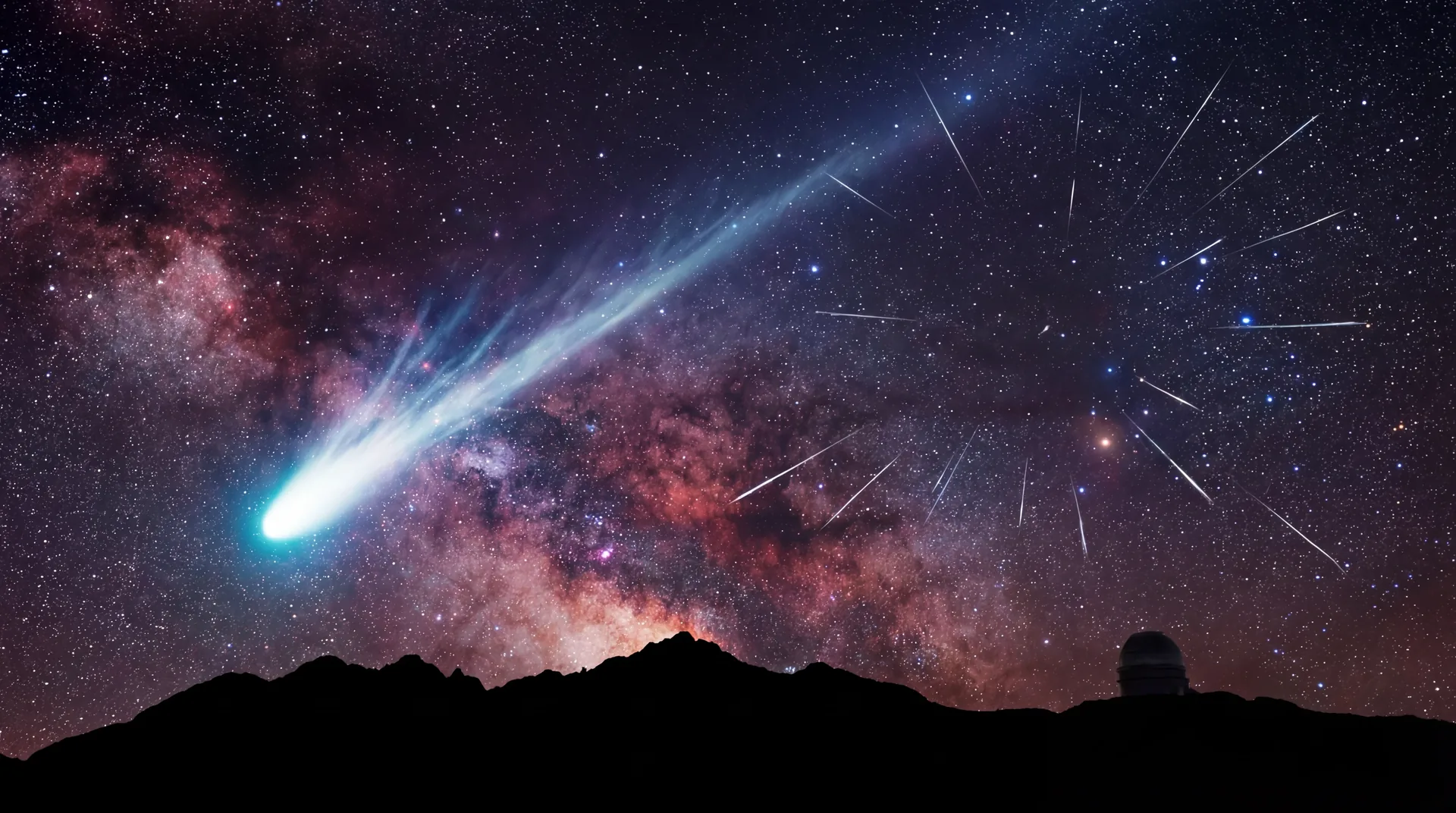

The Lyrid meteor shower is set to reach its spectacular peak between April 21 and April 22, 2026, marking a significant highlight in the spring astronomical calendar. NASA’s latest skywatching report indicates that this month will be particularly active, featuring the year’s brightest appearance of Mercury on April 3 and the arrival of a rare celestial visitor, Comet C/2025 R3. These events offer a unique trifecta for amateur astronomers, combining a reliable annual meteor display with rare planetary and cometary alignments.
When is the peak of the Lyrid meteor shower 2026?
The Lyrid meteor shower will reach its peak during the late night of April 21 and through the predawn hours of April 22, 2026. Viewers should look toward the eastern sky starting at approximately 10:00 p.m. local time, focusing on the area near the bright star Vega in the constellation Lyra.
The annual Lyrid meteor shower occurs when the Earth passes through the debris trail left by Comet Thatcher, a long-period comet that orbits the Sun once every 415 years. As these fragments of rock and ice enter Earth’s atmosphere at speeds of roughly 110,000 miles per hour, they incinerate, creating the brilliant "shooting stars" that have been recorded by astronomers for over 2,700 years. While the shower is active from mid-April through the end of the month, the highest concentration of meteors occurs during this specific 24-hour window.
How can I spot the new comet in April?
To spot Comet C/2025 R3 in April, observers should scan the eastern sky within the constellations Pegasus and Pisces during the predawn hours. Because the comet is expected to reach a magnitude of eight, it will not be visible to the naked eye and will require the use of binoculars or a small telescope for successful viewing.
According to Chelsea Gohd from NASA’s Jet Propulsion Laboratory (JPL), the best opportunity to view Comet C/2025 R3 arrives around April 17, as it gains brightness ahead of its closest approach to Earth. On April 27, 2026, the comet will pass within 44 million miles of our planet. Northern Hemisphere viewers have the advantage of morning visibility through late April, while those in the Southern Hemisphere will begin seeing the comet in the evening sky by early May.
Why is Mercury so bright this month?
Mercury reaches its maximum brightness on April 3, 2026, because it will be at its greatest elongation, which is its furthest angular distance from the Sun as seen from Earth. This rare positioning allows the planet to sit higher above the horizon, making it visible outside of the Sun's overwhelming glare shortly before sunrise.
Orbital mechanics dictate that Mercury is often lost in the solar glow due to its proximity to the Sun. However, during the greatest elongation on April 3, the planet will be prominently placed in the eastern sky. NASA experts suggest looking low on the horizon just above Mars. This month’s positioning is unique because the specific tilt of Earth’s axis in early spring provides a clearer line of sight to the innermost planet than most other times of the year.
What are the best practices for viewing the Lyrid meteor shower?
To maximize the visibility of the Lyrid meteor shower, stargazers should find a dark-sky location far from urban light pollution and allow their eyes to adjust for 30 minutes. Avoid using mobile phones or white-light flashlights, as the blue light emitted by screens can reset night vision and make faint meteors impossible to see.
Preparation is key for observing high-altitude phenomena. NASA’s Skywatching guide recommends the following steps for an optimal experience:
- Locate the Radiant: Find the star Vega in the constellation Lyra, but look slightly away from it to see longer meteor trails.
- Check the Moon Phase: Monitor the lunar cycle, as a bright moon can wash out the fainter "shooting stars" of the Lyrid meteor shower.
- Use Red Lights: If you need to check a star map, use a red-filtered flashlight to preserve your scotopic vision.
- Timing: The hours between midnight and dawn are historically the most productive for meteor counts.
These celestial events are more than just visual spectacles; they provide vital data for researchers. By tracking the brightness and trajectory of Comet C/2025 R3, scientists at NASA Science can refine models of cometary behavior and the distribution of matter in the Oort Cloud. As Naomi Hartono and the team at NASA continue to monitor these events, the public can stay updated through the "What’s Up" video series on NASA+, which bridges the gap between professional astrophysics and amateur skywatching.
Looking ahead, the observation of these bodies aids in the broader mission of planetary defense and exploration. The same debris fields that create the Lyrid meteor shower help researchers understand the environment through which upcoming missions, such as Artemis II, must travel. As we move deeper into 2026, the data gathered from this April’s skywatching will contribute to our evolving understanding of the solar system’s complex mechanics.





Comments
No comments yet. Be the first!