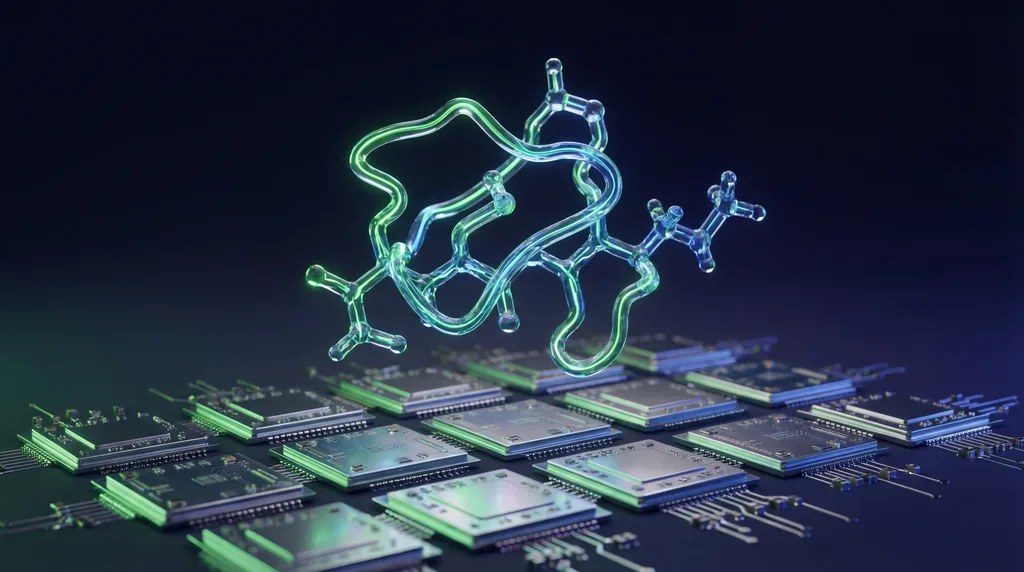

Workload balancing in multi-GPU ab initio simulations acts as the critical scheduler that distributes intense computational tasks across various processing units to maximize hardware utilization and maintain high parallel efficiency. By effectively managing electron repulsion integrals and exchange correlation quadrature, these algorithms prevent hardware idling and ensure that the immense power of NVIDIA architectures is fully harnessed. This orchestration is essential for scaling complex quantum chemistry calculations to the level of large biological molecules.
For decades, the field of computational chemistry has been defined by a frustrating compromise between speed and accuracy. Researchers studying the behavior of life-saving proteins or novel materials have typically had to choose between fast, approximate empirical force fields or high-precision, but agonizingly slow, ab initio molecular simulations. A groundbreaking new study by researchers Jun Yang and Qiujiang Liang introduces a multi-GPU implementation of local correlation methods that shatters this barrier. By leveraging a third-order many-body expansion orbital-specific virtual second-order Møller-Plesset perturbation theory (MBE(3)-OSV-MP2), the team has achieved a 40-fold acceleration in simulating complex molecules such as Insulin, bringing high-fidelity quantum chemistry into a timeframe suitable for modern drug discovery.
What is the role of workload balancing in multi-GPU ab initio sims?
Workload balancing in multi-GPU ab initio simulations is the process of partitioning and distributing massive mathematical workloads across multiple graphics cards to ensure no single processor becomes a bottleneck. This technique is vital for maintaining parallel efficiency—which the researchers clocked at 84% across 24 GPUs—ensuring that the speed of the calculation increases linearly with the amount of hardware added to the task.
In the research conducted by Yang and Liang, effective workload balancing was achieved by optimizing the distribution of local MP2 computations. Because quantum chemistry involves "sparse" operations—where many interactions are negligible and can be ignored to save time—traditional parallelization often leads to some GPUs working while others wait. The new MBE(3)-OSV-MP2 algorithm addresses this by utilizing a multi-node strategy that balances the generation of Orbital-Specific Virtuals (OSV) and the direct regeneration of MP2 integrals. This ensures that the NVIDIA A800 GPUs used in the study maintained peak utilization throughout the 784-atom simulation of Insulin.
Beyond simple task distribution, the implementation focuses on CUDA kernel adaptation. By tailoring the code specifically for the architecture of modern GPUs, the researchers allowed the system to handle the "inherently local" nature of molecular correlations. This means the software doesn't just work harder; it works smarter by aligning the math of quantum mechanics with the physical architecture of the silicon chips, resulting in an O(N1.9) scaling factor that is significantly more efficient than the traditional O(N5) scaling of standard MP2 theories.
What speedups can multi-GPU acceleration achieve for complex molecules like insulin?
Multi-GPU acceleration can achieve a 40-fold wall-time speedup compared to traditional canonical RI-MP2 methods and a 10-fold increase over existing CPU-based local correlation implementations. For a large-scale peptide like Insulin, this allows for full energy calculations in as little as 24 minutes, a task that previously required days of high-performance computing time.
The performance benchmarks for Insulin (a 784-atom peptide) demonstrate the transformative power of this implementation. Using a cc-pVDZ basis set with 7,571 basis functions, the researchers completed the calculation in just 24 minutes on a cluster of eight NVIDIA A800 GPUs. When the complexity was increased to the cc-pVTZ basis set, involving 17,448 basis functions, the calculation still concluded in only 6.4 hours. This represents a massive shift in feasibility for quantum pharmacology, where high-precision data is needed to understand how drugs bind to proteins at the atomic level.
Key performance metrics from the study include:
- 40-fold speedup for (H2O)128 clusters compared to canonical methods.
- 10-fold speedup over specialized CPU-based local correlation software.
- 84% parallel efficiency maintained when scaling up to 24 GPUs across multiple nodes.
- Significant reduction in wall-time, allowing for iterative research cycles that were previously impossible.
Why is orbital localization a bottleneck in GPU local correlation theories?
Orbital localization acts as a bottleneck because the iterative mathematical procedures required to define local electron "neighborhoods" are traditionally difficult to parallelize effectively on GPU architectures. The process often requires sequential operations that do not naturally fit the massively parallel "SIMT" (Single Instruction, Multiple Threads) nature of NVIDIA CUDA kernels, leading to hardware underutilization.
In quantum chemistry, localization is necessary to reduce the complexity of the calculation. Instead of looking at how every electron interacts with every other electron across a whole molecule, researchers use "local" methods to focus on immediate neighbors. However, finding these local spots—specifically through the Jacobi-Pipek-Mezey localization—is computationally taxing. Yang and Liang overcame this by developing a randomized OSV generation technique and adapting the localization procedure to be more "GPU-friendly." This involved rewriting the underlying algorithms to minimize the communication between GPUs and maximize the time spent on raw calculation.
By addressing the localization bottleneck, the team allowed the MBE(3)-OSV-MP2 method to function with near-peak efficiency. They utilized a "direct MP2 integral regeneration" strategy, which re-calculates certain values on the fly rather than storing them in memory. This is a crucial optimization for GPUs, which have incredibly fast processors but relatively limited memory (VRAM) compared to system RAM. This trade-off—using more math to save memory—is what allows a molecule as large as Insulin to fit onto a GPU cluster without crashing the system.
The Precision Gap in Molecular Dynamics
The precision gap refers to the massive disparity in accuracy between empirical force fields, which use simple physics to simulate molecules, and ab initio methods, which solve the fundamental equations of quantum mechanics. While force fields are fast enough to simulate the folding of a protein over microseconds, they often lack the "electronic" detail required to understand chemical reactions or tight drug-binding events. Møller-Plesset perturbation theory (MP2) provides the necessary accuracy, but its computational cost typically restricts it to very small molecules.
For large biological molecules like Insulin, the cost of MP2 grows so rapidly with size (scaling at the fifth power of the number of electrons) that it becomes a "computational wall." To climb this wall, scientists use local correlation methods, which assume that electron interactions are short-ranged. While this theory exists on paper, implementing it on modern hardware has been the primary hurdle. The work of Yang and Liang effectively bridges this gap, providing the "exactness" of ab initio chemistry at the speeds required for practical molecular dynamics.
MBE(3)-OSV-MP2: A New Architecture for Multi-GPU Systems
The MBE(3)-OSV-MP2 framework combines the Many-Body Expansion (MBE) with Orbital-Specific Virtuals (OSV) to decompose a massive calculation into smaller, manageable fragments. The "Many-Body Expansion" essentially breaks a large system into monomer, dimer, and trimer interactions. By calculating these smaller pieces and summing them up, the algorithm avoids the exponential complexity of the whole system. The addition of OSV further refines this by tailoring the mathematical space to each specific electron pair, reducing the number of variables without sacrificing precision.
This architectural shift is what allows the system to achieve its O(N1.9) scaling. In practical terms, doubling the size of a molecule like Insulin no longer results in a 32-fold increase in computing time; instead, it roughly quadruples the time. This nearly linear scaling is the "holy grail" of computational chemistry, as it theoretically allows the simulation of even larger macromolecules, such as DNA complexes or entire viral capsids, provided enough GPUs are available.
Implications for Drug Discovery and Quantum Pharmacology
The ability to simulate large molecules like Insulin with quantum-level precision in minutes rather than days has profound implications for the pharmaceutical industry. High-throughput drug screening currently relies on "best guess" models that frequently fail in clinical trials. By integrating MBE(3)-OSV-MP2 into the drug discovery pipeline, researchers can perform "exact" molecular modeling to predict how a drug candidate will interact with its target protein with unprecedented reliability.
This shift from "approximate" to "exact" modeling could significantly reduce the time-to-market for novel therapeutics. In the case of Insulin research, which is vital for treating diabetes, understanding the minute electronic shifts during protein binding can lead to the design of more stable or faster-acting insulin analogues. Furthermore, the integration of these fast ab initio methods with AI-driven screening tools could allow AI to "learn" from high-fidelity quantum data, further accelerating the discovery of new medicines.
Looking ahead, the researchers suggest that this is only the beginning. As GPU hardware continues to evolve with more VRAM and specialized tensor cores, the MBE(3)-OSV-MP2 method will likely scale to even larger systems. The "What's Next" for this field involves moving beyond static energy calculations and into ab initio molecular dynamics (AIMD), where the motion of atoms is simulated in real-time using quantum forces. With the 40x speedup already achieved, the dream of watching a drug bind to a protein in a full quantum simulation is closer than ever before.





Comments
No comments yet. Be the first!