
From Paradox to Processor: How a Century of Quantum Mechanics Shaped Modern Technology
In 1926, quantum mechanics was a burgeoning field of radical abstractions that unsettled the foundational principles of classical physics. A century later, what began as a series of controversial mathematical frameworks and philosophical paradoxes has transformed into the indispensable architecture of the modern global economy. Far from being a mere academic curiosity, the "quantum weirdness" that once baffled the likes of Albert Einstein and Niels Bohr now powers the microchips in our pockets, the lasers in our hospitals, and the secure networks that protect our data. In a sweeping new perspective published in the journal Science, Dr. Marlan Scully, a University Distinguished Professor at Texas A&M University, charts this remarkable journey from abstract theory to the driving force of 21st-century innovation.
The Thought Experiment That Changed Reality
The origins of quantum theory are perhaps best encapsulated by Erwin Schrödinger’s famous 1935 cat paradox. Intended as a critique of the Copenhagen interpretation of quantum mechanics, the thought experiment proposed a scenario where a cat in a sealed box could be considered simultaneously alive and dead until an observer looked inside. This concept, known as superposition, was initially viewed as a barrier to scientific acceptance—a sign that the theory was either incomplete or fundamentally absurd. However, as Dr. Scully notes in his retrospective, this perceived "weirdness" eventually transitioned from a philosophical puzzle into an empirical reality that scientists could measure and, eventually, manipulate.
The shift from theoretical debate to practical application was not immediate. Early pioneers like Werner Heisenberg and Schrödinger developed matrix mechanics and wave mechanics, respectively, as competing methods to describe the behavior of subatomic particles. These frameworks eventually converged into quantum field theory, providing a unified explanation for how particles interact with electromagnetic and nuclear forces. "Quantum mechanics started as a way to explain the behavior of tiny particles," said Scully, who is also affiliated with Princeton University. "Now it's driving innovations that were unimaginable just a generation ago."
The First Quantum Revolution: Building the Modern World
The transition from the laboratory to the marketplace defined the "First Quantum Revolution." This era was characterized by the development of technologies that rely on quantum effects but do not necessarily require the active manipulation of individual quantum states. The most ubiquitous example is the semiconductor. By understanding how electrons move through crystalline lattices—a process governed entirely by quantum mechanics—scientists were able to invent the transistor. This single device became the building block of all modern electronics, enabling the transition from room-sized vacuum tube computers to the high-performance processors of today.
Another landmark achievement of this era was the development of the laser. Rooted in the principle of quantum coherence—where atoms or photons stay connected and act in perfect harmony—the laser was initially dismissed as a "solution looking for a problem." Today, its applications are nearly universal, spanning from the mundane, such as barcode scanners and fiber-optic internet, to the life-saving, including precision eye surgery and advanced medical imaging. Magnetic Resonance Imaging (MRI), for instance, relies on the quantum property of atomic "spin" to visualize the interior of the human body without invasive procedures.
Insights from Texas A&M: A Century in Review
Dr. Marlan Scully’s analysis in Science provides a unique vantage point on this historical trajectory. As a co-author of the seminal textbook "Quantum Optics," Scully has spent decades at the forefront of the field. His retrospective highlights how the focus of research has shifted from the mere observation of quantum phenomena to the sophisticated engineering of quantum systems. The Texas A&M research emphasizes that we are no longer passive observers of the subatomic world; we are its architects.
Scully’s own contributions illustrate this shift. His work on coherent nanoscale laser spectroscopy has allowed researchers to map molecules at an atomic resolution, while his pioneering research into quantum heat engines has begun to challenge the classical Carnot limit—the theoretical maximum efficiency for heat engines defined by 19th-century thermodynamics. By leveraging quantum coherence, these engines suggest a future where energy conversion could surpass the limitations of classical physics, hinting at a new frontier in sustainable power and propulsion.
The Second Quantum Revolution: Computing and Security
We are currently entering what many physicists call the "Second Quantum Revolution." While the first revolution gave us devices that utilize quantum effects, the second is defined by our ability to actively control and isolate individual quantum states. Central to this movement is quantum entanglement, a phenomenon Albert Einstein famously derided as "spooky action at a distance." Entanglement allows two particles to become so deeply linked that the state of one instantaneously influences the other, regardless of the distance between them.
This "spooky" connection is the cornerstone of two transformative fields:
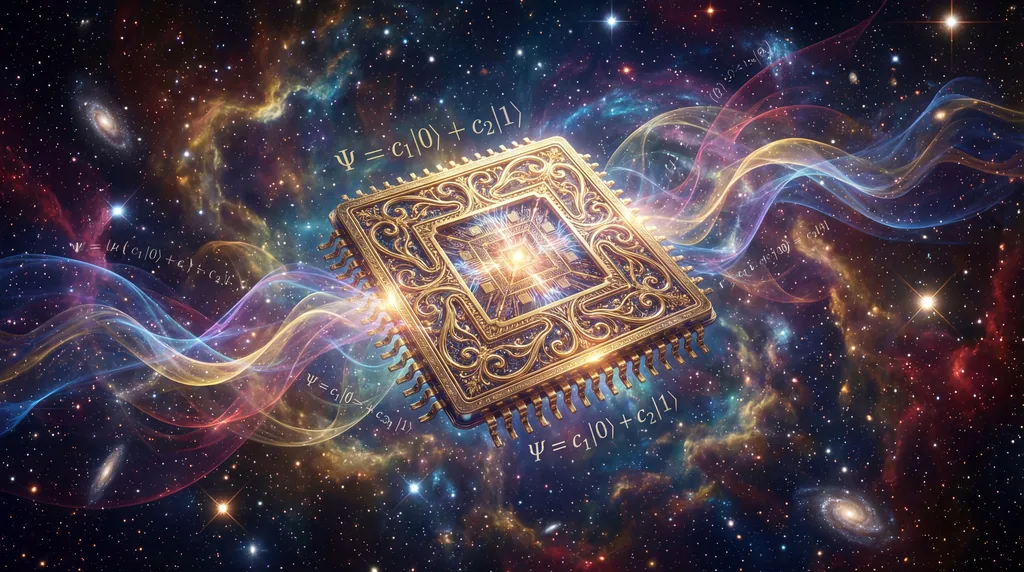
- Quantum Computing: Unlike classical bits that are either 0 or 1, quantum bits (qubits) utilize superposition to perform complex calculations at speeds that could theoretically dwarf the most powerful supercomputers. This holds the potential to revolutionize medicine through molecular modeling and optimize global logistics in ways previously thought impossible.
- Quantum Cryptography: By using entangled particles to transmit information, researchers are developing "unhackable" communication networks. Because any attempt to observe a quantum state alters its properties, a breach in a quantum-encrypted line would be immediately detectable, providing a level of security that classical mathematics cannot match.
Expanding the Quantum Horizon: Biology and the Cosmos
The reach of quantum mechanics is extending beyond the realm of physics and into complex biological and cosmic systems. Dr. Scully points out that techniques like coherent Raman spectroscopy are now being used in biology to map viruses at the nanoscale, offering a new lens through which to view pathology and drug delivery. Furthermore, quantum principles are being used to solve long-standing mysteries in fluid dynamics. By studying superfluid helium—which exhibits zero viscosity due to quantum effects—researchers are finding patterns that help explain the chaotic nature of turbulence. This research could lead to more accurate weather forecasting, improved climate models, and safer commercial aviation.
On a cosmological scale, the quest to unify quantum mechanics with Einstein’s theory of general relativity remains the "holy grail" of modern science. Research into string theory and quantum gravity aims to explain the behavior of the universe at its most extreme limits, such as the interiors of black holes. The Texas A&M report suggests that the same principles powering today’s computers may eventually provide the key to understanding the very origin of spacetime.
The Future of Quantum Mastery
Despite a century of progress, Dr. Scully maintains that we have only scratched the surface of what quantum mechanics can achieve. The future holds the promise of even more sensitive measurement tools, such as the quantum-enhanced sensors used in LIGO to detect gravitational waves—ripples in spacetime caused by distant cosmic collisions. These instruments provide a new way to "hear" the universe, allowing us to observe events that are invisible to traditional telescopes.
As we look toward the next century, the challenge lies in bridging the gap between delicate laboratory experiments and commercial-scale utility. The transition will require interdisciplinary collaboration across physics, engineering, and materials science. "At the start of the 20th century, many thought physics was complete," Scully reflected. "Now, in the 21st century, we know the adventure is just beginning." The next hundred years may well see quantum technology move from our pockets into every facet of our biological and planetary existence, fundamentally rewriting the rules of what is possible.




Comments
No comments yet. Be the first!