
When will Deutsche Telekom launch Starlink services in Europe?
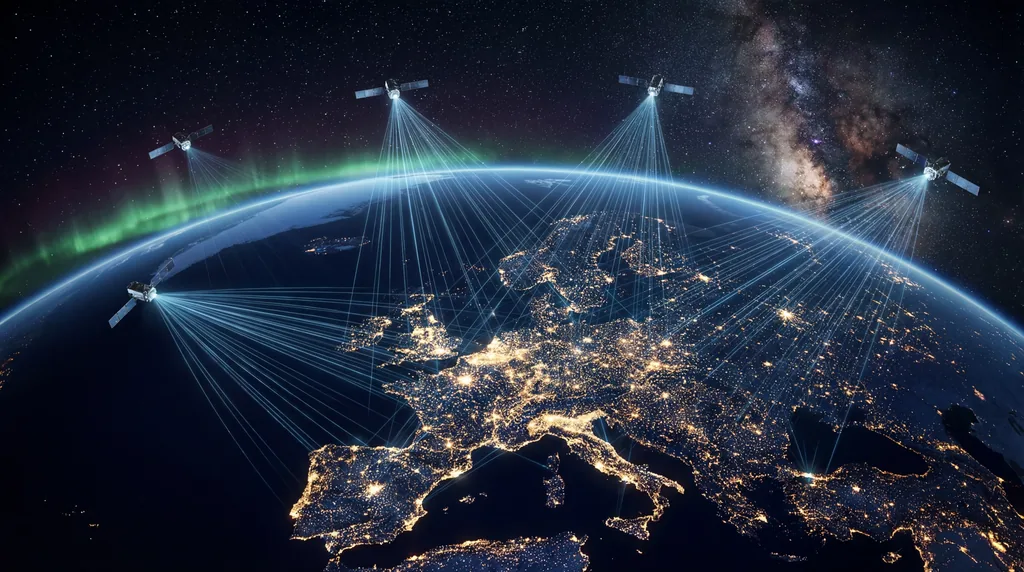
Deutsche Telekom plans to launch Starlink direct-to-smartphone services in early 2028, targeting 10 European countries to eliminate mobile dead zones. This partnership with SpaceX will initially leverage Mobile Satellite Service (MSS) spectrum to provide high-speed 5G connectivity to over 140 million subscribers, ensuring seamless coverage in remote and rural areas across the continent.
The strategic roadmap for this rollout was unveiled during the 2026 Mobile World Congress in Barcelona, signaling a significant shift in European telecommunications. By integrating Starlink Mobile V2 technology, Deutsche Telekom aims to transition from basic satellite messaging to a mass-market 5G technology solution. This initiative is designed to support standard smartphones without requiring specialized hardware or modifications, effectively turning the sky into a network of orbital cell towers.
How does Starlink Mobile V2 work with smartphones?
Starlink Mobile V2 works by using advanced satellite-to-cell technology to emulate terrestrial cell towers from Low Earth Orbit (LEO). These satellites feature massive phased-array antennas capable of connecting directly to existing LTE and 5G smartphones. When a user loses a ground-based signal, the device automatically switches to the MSS spectrum provided by the satellite constellation.
Michael Nicolls, SpaceX vice president of satellite engineering, explained that the Starlink V2 spacecraft are significantly more powerful than their predecessors. Unlike earlier iterations that were limited to text messaging and voice, the V2 architecture is engineered for high-bandwidth data. To achieve this, SpaceX utilizes the 2 gigahertz (GHz) band, which offers the necessary penetration and capacity to deliver a robust mobile experience directly to the consumer's hand.
The deployment of these satellites relies heavily on the success of the Starship rocket, which is currently in development. Each Starship launch is expected to carry more than 50 V2 satellites, allowing for the rapid assembly of the constellation. According to Jason Rainbow of SpaceNews, SpaceX anticipates needing approximately 1,200 satellites to provide continuous global coverage, a feat they aim to achieve within a six-month window following the initial 2027 launches.
What speeds can Starlink V2 satellites provide to phones?
Starlink V2 satellites are engineered to provide peak data speeds of up to 150 megabits per second (Mbps) per user, effectively bringing 5G-grade performance to space-based connectivity. This represents a 20-fold increase in throughput compared to earlier direct-to-cell technologies, enabling high-definition video streaming, voice calls, and rapid data transfers in regions previously deemed unreachable by traditional infrastructure.
The technical leap in speed is attributed to the acquisition of EchoStar’s MSS spectrum, which provides the frequency foundation for next-generation services. While current satellite-to-cell services are often restricted to emergency "SOS" messaging, the 2028 European rollout aims for a full-service experience. To maximize this 5G technology, handset manufacturers must integrate specific chips capable of processing these satellite-specific frequencies, a development already underway within the global hardware supply chain.
Achieving these speeds involves complex interference management between terrestrial and orbital signals. Deutsche Telekom and SpaceX are working to ensure that the MSS spectrum does not disrupt existing ground networks. This synergy is critical for maintaining low latency, which is expected to be significantly lower than traditional geostationary satellite internet, making the service feel indistinguishable from a standard 5G connection for the end user.
Geographic Reach and Eliminating Dead Zones
The primary goal of the Deutsche Telekom and Starlink partnership is to achieve 100% geographic coverage across its 10 initial European markets. By utilizing satellite-to-cell infrastructure, the companies can provide a safety net for maritime zones, mountainous regions like the Alps, and remote rural communities where building physical towers is economically or geographically unfeasible.
- Remote Rural Areas: Providing high-speed internet to farming communities and isolated villages.
- Maritime and Coastal Zones: Ensuring continuous connectivity for vessels and offshore workers.
- Mountainous Terrains: Overcoming signal blockages in deep valleys and high-altitude regions.
- Emergency Redundancy: Serving as a critical backup during terrestrial network failures or natural disasters.
This expansion is not just about convenience; it is about sovereign digital infrastructure. By securing MSS spectrum rights, Deutsche Telekom positions itself as a leader in the "always-on" economy. The 140 million subscribers in the rollout zone will benefit from a network that effectively "follows" them, regardless of the availability of physical cell towers, thereby bridging the digital divide that has persisted in Europe's more rugged landscapes.
The Future of Hybrid Telecom Infrastructure
Integrating Starlink into the Deutsche Telekom ecosystem represents the first step toward a seamless, hybrid telecommunications infrastructure. This model blends the high capacity of ground-based 5G with the ubiquitous reach of LEO satellites. As the industry moves toward 2028, the competitive landscape is intensifying, with rivals like Vodafone partnering with AST SpaceMobile to claim their share of the orbital market.
Regulatory hurdles remain a significant factor in the timeline for Starlink Mobile V2. The European Union must renew portions of the 2 GHz band next year, and SpaceX is still awaiting final approvals to fully acquire the necessary MSS spectrum from EchoStar. Furthermore, the E-E-A-T (Experience, Expertise, Authoritativeness, and Trustworthiness) of this project is bolstered by the involvement of established entities like the Federal Communications Commission (FCC) in the U.S., whose regulatory decisions often set the tone for international satellite policy.
Looking ahead, the success of this venture will depend on the successful integration of satellite-capable hardware into the next generation of smartphones. As Elon Musk and SpaceX continue to iterate on the Starship platform, the cost of launching these massive V2 arrays is expected to drop, potentially making satellite-to-cell services a standard feature of premium mobile contracts. For now, the 2028 target stands as a landmark date for the future of global connectivity.





Comments
No comments yet. Be the first!