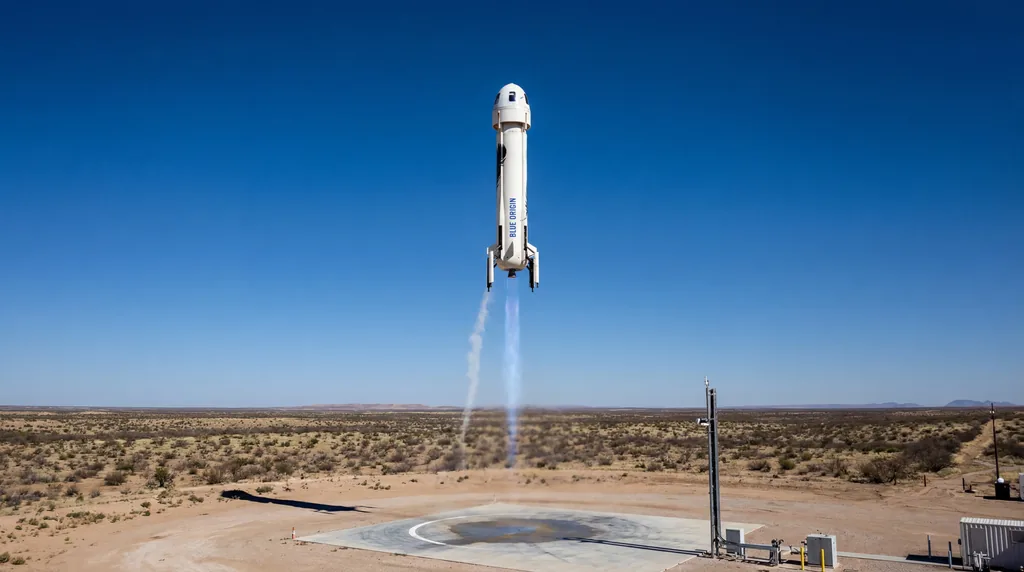

Blue Origin Launches First New Shepard Mission of 2026 with Crew of Six
On January 22, 2026, Blue Origin successfully inaugurated its flight calendar for the year with the launch of the NS-38 mission. Lifting off from the company’s dedicated Launch Site One in West Texas, the New Shepard suborbital vehicle carried a crew of six to the edge of space, marking a significant milestone in the company’s efforts to normalize civilian spaceflight. The mission, which reached an apogee of 106 kilometers, demonstrated the continued operational maturity of the reusable rocket system and reinforced Blue Origin’s position in the competitive suborbital tourism market.
Mission Overview and Crew Composition
The NS-38 mission featured a diverse manifest of five paying customers and one internal Blue Origin representative. The civilian crew included Timothy Drexler, an asphalt company owner; Linda Edwards, a retired physician; Alain Fernandez, a real estate developer; Alberto Gutiérrez, an entrepreneur; and Jim Hendren, a retired U.S. Air Force pilot. Their backgrounds reflect the growing demographic of private individuals seeking the "overview effect" provided by brief stays in microgravity.
A notable aspect of the mission was a last-minute adjustment to the crew roster. Andrew Yaffe, a businessman originally scheduled for the flight, was forced to withdraw just two days prior due to an illness. Demonstrating operational flexibility, Blue Origin selected Laura Stiles, the company’s Director of New Shepard Launch Operations, to fill the seat. Stiles, who joined the company in 2013 and has served as "Crew Member 7"—the lead for astronaut training—became the third employee to fly on the vehicle, following in the footsteps of Vice President Audrey Powers and Chief Architect Gary Lai.
Technical Performance and Reusability
The flight followed a textbook profile for the New Shepard system, despite a brief 20-minute delay caused by "unauthorized personnel on the range." Liftoff occurred at 11:25 a.m. Eastern. Approximately two and a half minutes into the flight, the booster separated from the crew capsule, beginning its autonomous descent back to the West Texas desert. The booster performed a precision, powered vertical landing, a feat that has become the hallmark of Blue Origin’s reusable hardware strategy.
The crew capsule continued its momentum, crossing the Karman line—the internationally recognized boundary of space—to reach a peak altitude of 106 kilometers above ground level. After several minutes of weightlessness for the passengers, the capsule re-entered the atmosphere and deployed its triple-parachute system. The entire mission lasted roughly 10 minutes from launch to touchdown. This rapid turnaround and successful recovery of both the booster and the capsule highlight the efficiency of the flight-proven components that Blue Origin has refined over dozens of launches.
Strategic Outlook for 2026
The success of NS-38 sets a positive tone for what Blue Origin anticipates will be its most active year to date. In 2025, the company completed nine New Shepard missions, seven of which were crewed. Phil Joyce, Senior Vice President for New Shepard at Blue Origin, emphasized the company’s commitment to reliability and customer experience in a statement following the landing, noting that the focus for 2026 remains on delivering "transformational experiences" through proven technology.
While the company has not finalized the exact number of missions for the current year, the strategic roadmap involves a significant increase in flight cadence. Joyce previously indicated that Blue Origin intends to move from a monthly cadence to "approximately weekly" flights within the next few years. This expansion will be supported by the introduction of three new New Shepard vehicles scheduled to enter service later in 2026, which will allow for more frequent operations and reduced downtime for refurbishment.
Broader Context of Civilian Spaceflight
The continued success of the New Shepard program contributes to the cumulative growth of human spaceflight statistics, particularly in the realm of suborbital civilian travel. By consistently flying diverse crews, Blue Origin is effectively democratizing access to the upper atmosphere and microgravity environments. Beyond tourism, these missions provide critical data on how non-professional astronauts handle the physical and psychological demands of spaceflight, which is essential for the future of commercial space stations and long-duration missions.
As Blue Origin scales its operations, the industry is watching closely to see how the suborbital market evolves alongside orbital endeavors like the upcoming New Glenn heavy-lift rocket. For now, the reliability of New Shepard serves as the foundation of the company’s commercial identity. Following her flight, Laura Stiles remarked on the emotional weight of the experience, stating, "The ride is incredible," a sentiment that Blue Origin hopes will continue to drive demand among private citizens and researchers alike.
Future Milestones
Looking ahead, the New Shepard program is expected to reach several key milestones in 2026, including:
- The maiden flight of the first of three new-generation New Shepard boosters and capsules.
- Potential expansion of payload-only missions to accommodate a growing backlog of microgravity research experiments.
- Continued integration of advanced autonomous systems to further streamline pre-launch and recovery operations.
With NS-38 concluded, the focus now shifts to the refurbishment of the booster and the preparation for the next crewed mission. As the launch rate accelerates, Blue Origin remains a central figure in the push to make space a destination not just for governments and scientists, but for anyone with the means and the desire to see the Earth from above.





Comments
No comments yet. Be the first!