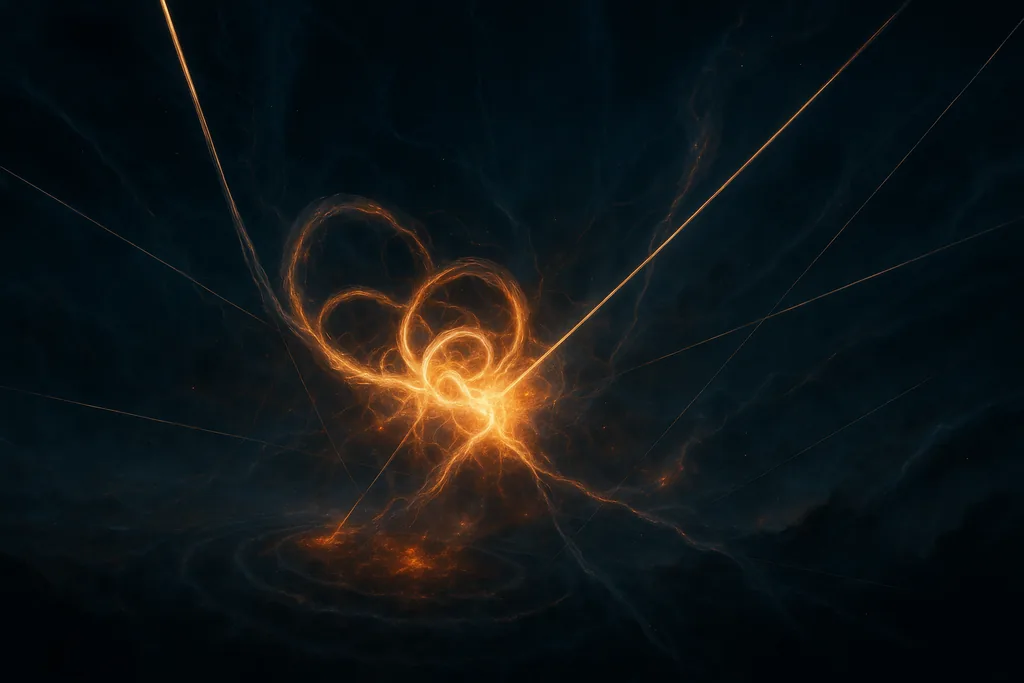
7 декабря 2025 года группа физиков-теоретиков опубликовала статью в журнале Physical Review Letters, утверждая, что заузленные конфигурации полей — так называемые «космические узлы» — могли занимать центральное место в первые мгновения существования Вселенной и, распутываясь, породить тот крошечный избыток материи над антиматерией, который сделал возможным появление звезд, планет и жизни.
Предложенная гипотеза объединяет два давно изучаемых расширения Стандартной модели — калибровочную симметрию B-L (барионное минус лептонное число) и симметрию Печчеи — Квинн (PQ) — для создания стабильных топологических узлов. Эти объекты ведут себя совсем не так, как обычное излучение, и могли доминировать в юном космосе в течение короткого периода, прежде чем сколлапсировать за счет квантового туннелирования и создать тяжелые правые нейтрино, распады которых благоприятствуют материи. Что особенно важно, модель предсказывает характерный сдвиг в первичном фоне гравитационных волн, который могут обнаружить будущие обсерватории.
Заузленные симметрии в физике элементарных частиц
Стандартная модель оставляет без ответа три большие загадки: почему нейтрино имеют массу, почему сильное ядерное взаимодействие сохраняет определенную симметрию (так называемая сильная CP-проблема) и почему в наблюдаемой Вселенной гораздо больше материи, чем антиматерии. Новая работа объединяет две идеи симметрии, которые физики рассматривали десятилетиями, чтобы решить эти проблемы в рамках одной целостной картины.
Одним из ингредиентов является симметрия Печчеи — Квинн, введенная для объяснения того, почему эксперименты практически не обнаруживают нарушения CP-четности в сильном взаимодействии; ее низкоэнергетической сигнатурой является аксион — широко обсуждаемый кандидат на роль темной материи. Другим элементом является калибровочная симметрия B-L, которая обеспечивает естественное место для тяжелых правых нейтрино и помогает понять массы нейтрино через механизмы качелей (seesaw mechanisms). Когда эти две симметрии нарушаются по мере остывания Вселенной, они порождают различные типы дефектов: нарушение PQ-симметрии дает сверхтекучие вихри, а нарушение калибровочной симметрии B-L создает трубки потока, которые ведут себя как магнитные струны.
От струн к эпохе преобладания узлов
Топологические дефекты хорошо известны в космологии как космические струны — чрезвычайно тонкие, но обладающие огромной плотностью трубки энергии, оставшиеся после нарушения симметрии. В комбинированной системе PQ+B-L во время фазовых переходов вскоре после Большого взрыва образуется сеть таких дефектов. В отличие от излучения, плотность энергии которого быстро падает по мере расширения Вселенной, энергия, заключенная в массивных нерелятивистских объектах, снижается медленнее.
В статье утверждается, что при определенном диапазоне параметров популяция узлов могла бы доминировать в энергетическом балансе космоса в течение ограниченной эпохи. Эта «эра узлов» не вечна: квантовое туннелирование позволяет узлам распутываться. Когда это происходит, накопленная энергия бурно высвобождается в виде частиц, включая тяжелые правые нейтрино, которые являются неотъемлемой частью сектора калибровочной симметрии B-L.
Как узлы создают больше материи, чем антиматерии
Бариогенез — создание наблюдаемого небольшого избытка материи над антиматерией — требует трех условий: процессов, нарушающих барионное число, нарушения симметрии комбинированной четности (CP) и отклонения от теплового равновесия. Коллапс узлов обеспечивает последнее условие, создавая всплеск тяжелых частиц нетепловым способом. Затем тяжелые правые нейтрино распадаются, причем процессы с нарушением CP-четности немного смещают вероятность распадов в сторону производства материи, а не антиматерии. В масштабах космической истории этого крошечного перекоса — примерно одна лишняя частица материи на миллиард актов аннигиляции — достаточно, чтобы породить тот материальный мир, который мы наблюдаем.
Гравитационные волны как тест
Одним из убедительных аспектов этого сценария является то, что фаза доминирования узлов и бурный коллапс макроскопических полевых конфигураций должны оставить отпечаток на самом пространстве-времени: стохастический фон гравитационных волн со специфической спектральной формой и характерным частотным масштабом. Поскольку узлы ведут себя как материя до своего распада, они изменяют то, как фон гравитационных волн претерпевает красное смещение по мере расширения Вселенной. По оценкам авторов, повторный нагрев (рехитинг) вблизи 100 ГэВ смещает пик в сторону более высоких частот по сравнению со многими другими источниками в ранней Вселенной.
Этот сдвиг открывает путь к наблюдательным проверкам. Космические и наземные детекторы следующего поколения работают в дополняющих друг друга частотных диапазонах: LISA будет исследовать милли- и децимиллигерцевый диапазон, DECIGO нацелен на децигерцевые частоты, а Cosmic Explorer повышает чувствительность на более высоких частотах. Обнаружение предсказанных спектральных особенностей или их исключение позволит напрямую определить, существовала ли когда-либо эпоха узлов.
Достоинства модели и открытые вопросы
Существуют и феноменологические узлы, которые еще предстоит распутать. Симметрия Печчеи — Квинн в этой модели рассматривается как глобальная симметрия, чтобы сохранить аксионное решение сильной CP-проблемы; глобальные симметрии являются деликатным вопросом в квантовой гравитации и могут нарушаться эффектами планковского масштаба. Более того, обеспечение соответствия физики аксионов, масс тяжелых нейтрино и калибровочных взаимодействий наблюдательным ограничениям (включая лимиты на дополнительные частицы и силы) сужает доступное пространство параметров. Авторы призывают к проведению более детальных численных расчетов и сопоставлению симуляций с сигнатурами гравитационных волн, которые могли бы искать детекторы.
Почему это важно
Если эта картина подтвердится, она предложит единое объяснение трех фундаментальных загадок — масс нейтрино, сильной CP-проблемы и бариогенеза — одновременно предоставляя экспериментаторам наблюдаемую цель в небе гравитационных волн. Гипотеза возрождает интуитивные представления XIX века о заузленных структурах в современной теоретико-полевой форме и переносит метафорическую «прародительскую» стадию космической истории в момент, который, в принципе, может быть исследован.
Для космологов и физиков-ядерщиков следующие шаги очевидны: развивать численное моделирование сетей топологических дефектов в этой комбинированной структуре симметрий, уточнять предсказанный спектр гравитационных волн и вписывать состав частиц модели в существующие коллайдерные и астрофизические ограничения. Для экспериментального сообщества этот результат дает еще один повод для реализации программы разнообразных гравитационно-волновых обсерваторий в различных частотных диапазонах.
Данное предложение пока не опровергает существующие парадигмы, но предлагает проверяемый и интеллектуально экономный путь к объяснению того, почему вообще что-то существует — и, тем самым, направляет гравитационно-волновую астрономию к вопросам, которые традиционно считались исключительной областью физики элементарных частиц.
Источники
- Physical Review Letters (research paper: "Tying Knots in Particle Physics")
- International Institute for Sustainability with Knotted Chiral Meta Matter (WPI‑SKCM2), Hiroshima University
- Deutsches Elektronen‑Synchrotron (DESY)
- Keio University
- Yamagata University




Comments
No comments yet. Be the first!